That You Were Never The Same?
What You Should Know
About Rattlesnakes in Utah

A Normal Part of Utah
Rattlesnakes in Utah are not something to panic about. But they are something to respect.
That seems to be even more true this year … 2026 … than in previous years. It sure seems like more people are seeing rattlesnakes along trails, near water, around foothills, and even closer to neighborhoods.
I’ve seen the same thing you may have seen. More photos of rattlesnakes. More videos. Numerous Facebook posts. People seeing them in places they haven’t seen them before.
It prompts some people to ask “Is this normal?” The answer is yes and no.
Yes, rattlesnakes are a normal part of Utah. No, you don’t need to cancel your hike, stop mountain biking, quit fishing, or keep your family indoors all summer. But you do need to pay attention.
Utah is rattlesnake country. Most of the state always has been rattlesnake country. And when the weather gets hot, dry, windy, smoky, and strange, snakes may show up in places where people notice them more.
That’s the key. They aren’t necessarily “taking over.” But more of us may be crossing paths with them because environmental factors are causing them to move around more.
So here’s the simple guide.
- What kind of rattlesnakes live in Utah?
- Where are you most likely to see them?
- Why do sightings seem higher this year?
- What should you do if you encounter one?
- And what should you do if you or someone with you is bitten?

Rattlesnakes Are An
Important Part of Utah
Let’s start here. Rattlesnakes aren’t villains.
They’re not out looking for people. They don’t chase hikers. They don’t want to bite you. They’re native creatures and they’re an important Utah natural resource.
Rattlesnakes help control the rodent population. They eat small mammals such as mice, rats, ground squirrels, and other animals that can carry disease or damage habitat.
Of course that may not make you want one under your patio. Fair enough. But in the wild, they’re doing a job. They’re part of the balance.
That’s one reason Utah law protects them. In general, you cannot harass, kill, collect, or possess a rattlesnake without proper authorization.
If you see one in the wild, the best thing to do is leave it alone. That’s also the safest thing to do.
Most rattlesnake bites happen when someone gets too close, is unaware of their surroundings, tries to move the snake, tries to kill it, or does something foolish for a photo op. Don’t be that person.

What Types of Rattlesnakes
Live in Utah?
There are several types of rattlesnakes in Utah depending on how the species and subspecies are described.
The Utah Division of Wildlife Resources says Utah has five rattlesnake species. The most common is the Great Basin rattlesnake which is often described as a subspecies of the Western rattlesnake.
You may also hear names such as Prairie rattlesnakes, Mojave rattlesnake, sidewinder, Southwestern speckled rattlesnake, midget faded rattlesnake, and Hopi rattlesnake.
Some of these names show up in regional guides, older sources, or discussions of a particular subspecies of rattlesnake.
The names can get confusing.
For most hikers, mountain bikers, anglers, and visitors, the exact species is not the main issue. The main issue is this: if it has a rattle, treat it with distance and respect.
The Great Basin rattlesnake is the one many people in northern Utah are familiar with. They’re the ones people along the Wasatch foothills and mountains are most likely to encounter.
They’re a medium-to-large, heavy-bodied pit viper. Typically they display a pale gray, brown, or olive color, with a series of darker blotches running down their back.
They also feature a distinct arrow-shaped head, a light-colored bar near its eyes and, of course, a rattle on its tail. Adults can measure from 30” to 48” in length.
They’re usually not overly aggressive but they are venomous. And any venomous rattlesnake can cause a serious medical emergency.
You may also see online references or photos of Western diamondback rattlesnakes being common in Utah. That type is actually only found in the extreme southwest part of Utah.
Not every rattlesnake photo used in an article, training class, or social media post represents the snake you are likely to see on a Utah trail.
Utah has its own mix of rattlesnakes. And the Great Basin rattlesnake is the big one to know.

Are Rattlesnakes The
Only Venomous Snake in Utah?
Yes, rattlesnakes are the only venomous snake Utah hikers, bikers, campers, anglers, and homeowners need to worry about. They’re the only venomous ones.
That also means that most snakes in Utah aren’t dangerous. Utah has many nonvenomous snakes, including gopher snakes, garter snakes, racers, kingsnakes, and others.
The most commonly confused snake is probably the Great Basin gopher snake. Many people also call them bull snakes although that name is often used loosely.
Gopher snakes can look and act a lot like rattlesnakes when startled. They may hiss loudly, flatten their heads, coil up, vibrate their tails, and even strike defensively if cornered.
That can scare anybody. But gopher snakes don’t have toxic venom.
They don’t have rattles at the end of their tails. They are nonvenomous constrictors that also help control rodents.
Still, don’t try to pick them up. That’s a good rule for all snakes. If you are not sure what it is, back away and leave it alone.
How to Identify a Rattlesnake
You don’t need to become a snake expert. But a few signs help.
Rattlesnakes usually have:
- a rattle at the end of the tail
- a broader triangular-looking head
- a heavier body
- vertical pupils
- and heat-sensing pits between the eyes and nostrils.
They may also coil when threatened. Also, don’t depend only on the rattle. Some rattlesnakes don’t rattle. Some have lost part of the rattle.
Some young rattlesnakes may have a small rattle that is harder to hear. And sometimes you just don’t see the snake until you’re too close.
That’s why the best course of action is simple. Treat any unknown snake as venomous and keep your distance. Then move away.
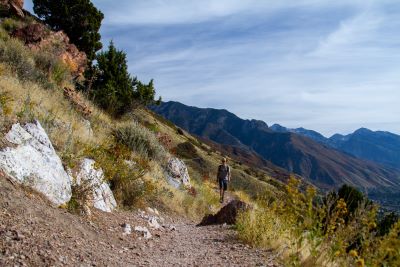
Image - Travel Utah
Where You Are Most Likely
To See Rattlesnakes in Utah?
Rattlesnakes in Utah live in a variety of habitats. They can show up in places that may surprise people but some areas are more likely than others.
Watch carefully in rocky benches, rocky hillsides, dry canyons, foothill trails, sagebrush country, open areas, lower elevations, desert washes, warm canyon mouths, creekside trails, and around rock piles.
Also be careful near brushy edges, near water in hot and dry weather, and even on high-elevation slopes during warmer months. So, that pretty much covers most of the great Utah outdoors.
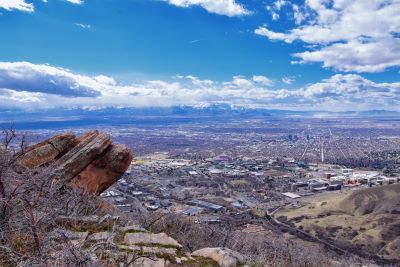
You can assuredly run into them along the Wasatch Front. They are quite common in the foothills above Salt Lake City.
You can also find them around Davis County, Utah County, Weber County, Cache Valley, Moab, Capitol Reef country, and many parts of southern Utah.
They’re part of the landscape. If you hike, bike, fish, camp, rock climb, trail run, or walk your dog in Utah, you may eventually see one.
I remember many years ago when I was a freshman at the University of Utah. Two teammates and I (on the U football team) decided to climb up the face of the rocky mountainside just above Red Butte Canyon on a warm spring day.
It was a steep climb which involved climbing over large rocks and ledges high above the dorms at the U. As we got to the top, we met a young man with a dog and a .22 rifle.
He asked us if we had climbed up the face of the mountain. We told him we had. He was amazed we hadn’t encountered any rattlesnakes.
He said that the sun-soaked face was rattlesnake-infested. We were shocked (being young idiots from out-of-state) and gladly accepted his invitation to follow him down the backside trail.

Why Does 2026 Feel Like A
Bigger Rattlesnake Year?
That’s the question many people are asking.
Is there something causing more rattlesnake encounters in Utah this year? Maybe not statewide but encounters sure seem more common on social media.
There are a few likely reasons.
First, warmer weather can bring snakes out earlier. Rattlesnakes are most active in late spring and early summer. That’s when they’re moving around, feeding, breeding, and looking for water.
Second, dry conditions matter. When Utah is hot and dry … like this year … water becomes more important for everything.
People head toward creeks, rivers, ponds, reservoirs, shaded canyons, and trail systems with water. So do rodents. And rattlesnakes follow food and water.
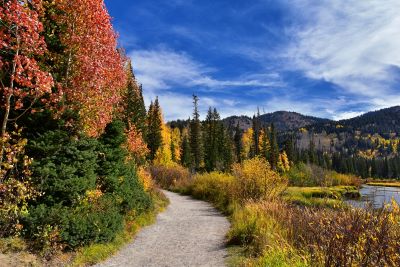
That means your favorite trail near a creek may also be a place where snakes are moving.
Third, wildfires can change things. If a fire burns through rattlesnake country, snakes may retreat underground, move away from heat, or later show up in areas where people notice them.
Firefighters working in foothill and canyon terrain may also have more close encounters because they’re moving through prime habitat. This was the case when firefighters were fighting the recent Bonneville Fire above the University of Utah in June.
Fourth, people are outside more than ever. More hikers. More mountain bikers. More dog walkers. More anglers. More trail cameras. More phones. More Facebook groups. More reports.
So some of what we’re seeing may be a real increase in rattlesnake encounters. Some may be better reporting. Some may be more people spending time in the same places snakes have always been.
Either way, the practical advice is the same. Be aware. Don’t panic. Give snakes room.
When Is Rattlesnake Season in Utah?
Rattlesnake season is not an exact date on the calendar. It depends on temperature, elevation, weather, and location.
But generally, rattlesnakes become more active in spring and stay active through the hot summer months. Late spring and early summer are especially important. That’s when snakes may be moving more during the day.
As summer gets hotter, they may become more active in the cooler parts of the day. Think morning. Think evening. Think warm but not blazing hot.
That matters for hikers and bikers. A rattlesnake may be sunning on a trail in the morning. It may be tucked under a bush in the heat of the day. It may be moving near dusk.
So don’t just watch for snakes at noon in July. Watch for them all season.

What To Do If You
Encounter a Rattlesnake
This is the part to remember. If you see a rattlesnake, stop.
- Don’t jump toward it.
- Don’t run past it.
- Don’t throw rocks at it.
- Don’t poke it with a trekking pole.
- Don’t try to move it off the trail.
- Don’t try to kill it.
Just stop and give it space.
The following additional tips are simple and effective:
- Stay calm.
- Keep a safe distance.
- Back away slowly.
- Keep children behind you.
- Hold dogs close.
- Alert other trail users.
- Give the snake a way out.
- Walk around it only if you can do so safely.
- Wait for it to move if the trail is narrow.
- Take a photo only from a safe distance.
A rattlesnake doesn’t want a confrontation. But if it feels trapped, is stepped on, cornered, or threatened, it may defend itself.
That’s usually when things go bad. The safest approach is boring, simple, and effective.
Back up. Let the snake move. Continue your hike only when it is safe.
What Else Not To Do
- Don’t try to prove you’re brave.
- Don’t try to impress your kids.
- Don’t try to get a close-up video.
- Don’t try to pin the snake.
- Don’t try to grab it.
- Don’t try to relocate it yourself.
Also, don’t assume a dead rattlesnake is safe. Even a dead venomous snake can be dangerous for a period of time because of reflexes.
And don’t assume a snake is “aggressive” just because it rattles. That rattle is a warning as much as an act of aggression. It is the snake saying, “You’re too close.”
Listen to it. Back away. Everybody wins.
What If a Rattlesnake Is in Your Yard?
This is where things get more personal.
A rattlesnake on a backcountry trail is one thing. A rattlesnake in your yard is another. Especially if you have kids, dogs, chickens, or a small fenced area.
If you see one in your yard, keep people and pets away. Watch where it goes from a safe distance. Don’t try to catch it. Don’t try to kill it.
Call local animal control, the Utah Division of Wildlife Resources, or a qualified wildlife removal professional if it’s in a problem area.
You can also make your yard less attractive to snakes.
- Start by removing brush piles, wood piles, junk piles, and other hiding spots.
- Keep grass and weeds trimmed.
- Seal gaps under sheds, decks, and porches.
- Keep garage doors closed.
- Reduce mice and rats.
- Be careful with bird feeders because spilled seed can attract rodents.
- Don’t leave standing water if it is drawing wildlife into tight spaces near the house.
Rattlesnakes don’t usually want to live next to you. But they may follow food, shade, shelter, or water. Take those away and your odds of avoiding a visit improve.
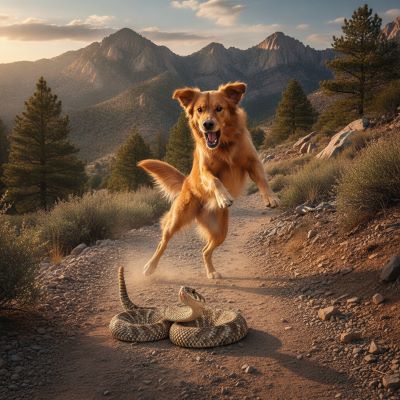
Yes. I know it's AI.
Dogs and Rattlesnakes
Dogs make rattlesnake encounters more complicated.
A dog may see a snake before you do. Or it may smell it. Or it may run right up to it.
That can turn a quiet encounter into an emergency fast. If you hike with dogs in rattlesnake country, keep them on a leash.
Keep them on the trail. Don’t let them charge into brush. Avoid rocky edges and thick grass. Be extra careful near water.
You may also want to consider rattlesnake aversion training for your dog.Rattlesnake aversion training is not perfect. Nothing is.
But for dogs that move around in snake country, it may help them learn to avoid the sight, sound, or smell of a rattlesnake.
Also know this ahead of time. Not every emergency vet has antivenom. If you live near and take your dog into rattlesnake habitat, it’s worth calling around before you need help.
Know which clinic near you handles venomous snake bites in dogs. That’s not being paranoid. That’s being prepared.
What If You’re Bitten
By a Rattlesnake?
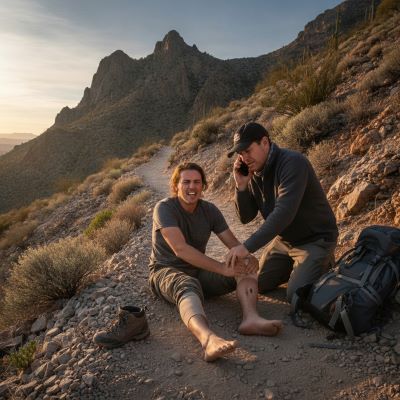
A rattlesnake bite is a real medical emergency.
Do not “wait and see.” Do not assume it was a dry bite. Do not try to treat it yourself.
Get medical help as fast as possible.
Your first response should be calm, fast, and practical. Move away from the snake. Call 911 if your phone has a connection.
The more I travel rurally in Utah, the more widespread cell phone coverage seems to be available.
Stay as calm and still as possible. Remove rings, watches, bracelets, tight shoes, or tight clothing before swelling starts.
Try to keep your heart rate down. The goal is to slow things down, stay steady, and get medical attention quickly.
Keep the bitten area in a neutral, comfortable position. Wash gently with soap and water if it’s possible and can be done without delay.
Cover the bite with a clean, dry dressing. If possible, mark the edge of swelling or tenderness and write the time.
Then get to a hospital as soon as possible. You can also call Poison Control at 1-800-222-1222 for guidance.
Don’t drive yourself if there is any other reasonable option. Snakebite can cause dizziness, weakness, shock, swelling, bleeding problems, and other dangerous symptoms.
You want medical professionals involved. Fast.
What Not To Do After a Rattlesnake Bite
Forget the old cowboy movies. Forget the pocket snakebite kits. Forget the dramatic knife scene. Most of that advice is bad.
- Don’t cut the wound.
- Don’t suck out the venom.
- Don’t use a tourniquet.
- Don’t apply ice.
- Don’t apply heat.
- Don’t use electric shock.
- Don’t drink alcohol.
- Don’t take aspirin, ibuprofen, or naproxen unless a medical professional tells you to.
Also, don’t try to catch or kill the snake. You don’t need the snake in your backpack. You don’t need to bring it to the emergency room.
If you can take a photo from a safe distance, fine. But don’t risk another bite to identify it.
Medical teams in Utah know how to treat rattlesnake bites. Your job is to stay calm, slow down, and get to the right help.
The concern with rattlesnake bites is not just pain. The toxic venom can cause swelling, tissue damage, bleeding problems, nerve effects in some species, and serious whole-body reactions.
There’s a good possibility that antivenom may be needed. The sooner doctors evaluate the bite, the better.
How to Stay Safer While
Hiking, Biking, and Fishing
You don’t need to be scared of the outdoors. Just adjust a little. And plan ahead a little.
First of all, be alert and always aware of your surroundings. On trails, watch the trail ahead as well as off to the sides. This is another reason I now carry a long walking stick whenever I can on the trail.
Step on top of rocks and logs, not blindly over them. Look before sitting on rocks or logs. Keep your hands out of holes and crevices. Avoid thick brush when possible.
Wear closed-toed shoes. Consider long pants in heavy snake country. Keep kids close on narrow trails.
Keep dogs leashed. Be careful at dawn and dusk. Be extra aware near water in hot, dry weather.
And don’t wear earbuds so loud that you miss a rattle. It’s probably best not to wear them at all if you’re hiking on Utah’s trails. For a number of reasons.
Mountain bikers need to be especially alert. You move fast. A snake on a warm trail can look like a stick until you’re right on top of it.
Slow down in rocky, brushy, narrow areas. Watch corners. Be careful near creek crossings, shade pockets, and open sunny stretches where snakes may warm themselves.
Anglers should also pay attention. Rattlesnakes can be near rivers, reservoirs, ponds, and rocky shorelines.
Before you step over driftwood, push through grass, or reach for gear on the bank, look first. A two-second pause can save your day.
Safety For Families
With Children
If you’re hiking with children, explain the rules before you hit the trail. Keep it simple.
Tell them to stay on the trail. Tell them not to pick up snakes. Tell them not to poke holes, reach into cracks, or climb through brush without looking.
Tell them to freeze if they hear a rattle. And tell them to alert an adult if they see a snake.
Kids do well with clear rules. And adults don’t need to instill fear in them. Just caution and awareness.
You can teach respect without fear. That’s the right tone for talking about rattlesnakes in Utah.
Remember that wild animals can show up in the most unlikely places. That’s part of why we love living here.

Image - Travel Utah
Are Utah’s Trails Still Safe?
Yes. Utah is still a wonderful place to hike, bike, fish, camp, and explore. Rattlesnakes don’t change that. They just add one more thing to be aware of.
The same way you watch the weather. The same way you carry water. The same way you check trail conditions. The same way you respect cliffs, flash floods, heat, ice, and wildfire smoke.
Rattlesnakes in Utah are part of the outdoor equation. Not a reason to stay home.
Final Thoughts About
Rattlesnakes in Utah
Here’s the simple version.
Rattlesnakes in Utah are common enough that you should be aware of them. But they’re not something to obsess over.
They’re not hunting you. They aren’t looking for trouble. What they are trying to do, though, is survive in the same dry, hot, rocky country we love to explore.
So:
- Give them room.
- Use common sense.
- Watch the trail ahead.
- Watch where you step.
- Watch where you sit.
- Keep dogs and kids close.
Be extra careful in late spring, during warmer weather, near water, around rocky benches, along dry canyons, and in lower elevations where rattlesnake encounters are more likely.
And if you do see one? Stop. Back up. Let it move. That’s it.
The best thing you can do is usually the simplest thing. Leave it alone.
Utah is still open. The trails are still worth it. The fishing is still worth it. The red rock, foothills, canyons, and mountain paths are still calling.
Just remember that you’re not the only one out there. Parts of Utah are still wild even in suburban areas.