That You Were Never The Same?
Skiing In Utah
Your
Guide to Top Resorts in Utah
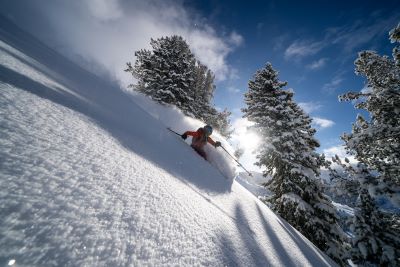
Photo: Travel Utah
The
Greatest Snow on Earth
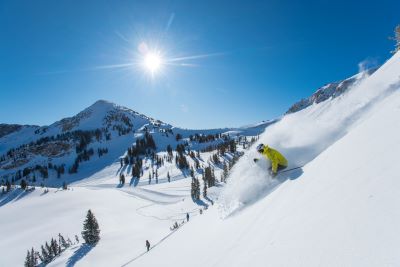
Skiing in Utah means powder. And the “greatest snow on Earth” according to Utahns. The kind that hovers, feathers, and makes you feel like you’re floating.
Locals brag about it. Visitors plan vacations around it. And year after year, our central Wasatch resorts deliver storm cycles that pile up 500 inches of famously light snow.
Why
Utah’s Snow Is So Good
It's a matter of geography and a little luck. Pacific storms shed moisture over the Sierra and Cascades. Then they reload and cool as they cross the Great Basin.
When those systems slam into the Wasatch, the high terrain squeezes out more snow. Cold, dry and powdery snow.
The wild card in all this? The Great Salt Lake sits between the Nevada and the Utah mountain ranges. This gives the extra kick we call the “lake effect.”
This often spectacular “lake effect” multiplies the amount of snow that hits the Wasatch, often dumping 2-3 feet at a time. That “multiplier effect” is real.
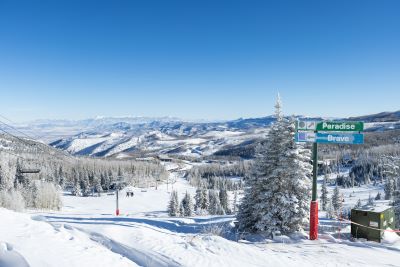
Photo: Travel Utah
Why I Live Where I Live
The mountains are right here where I live. My home office window looks right out on Mt. Olympus rising up on the east side of the Salt Lake Valley.
It’s not like in some cities where you can see mountains way off in the distance. They’re right here. Part of the city.
Rising straight up from the east side of the Salt Lake valley floor. Most of the major ski areas are within an hour's drive of the city.
Only
Minutes Away
As spectacular as the scenery is, this unique geography makes Utah one of the most accessible winter vacation playgrounds in the United States. It's unbelievably easy to get to. In fact, locals tend to take this closeness for granted.
Believe it or not, half the people in the US are within a 2½ hour flight from the Salt Lake City International Airport. When that flight lands, you’re less than an hour's drive from 11 world-class ski resorts. Downtown Salt Lake City is less than a 30-minute drive from some of the best ski resorts in the world.
Drive a little or come from another direction and you’ll find four more.
Skiing
in Utah Means Powder
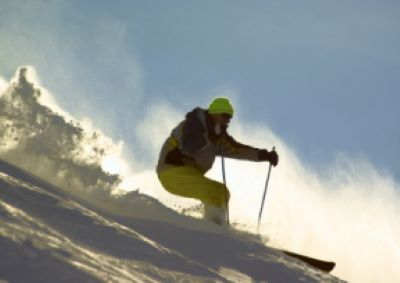
Skiing in Utah means powder skiing on seemingly never-ending acres of terrain. Brooke Williams said in his book Utah Ski Country, “To ski powder is to be engulfed by nature.”
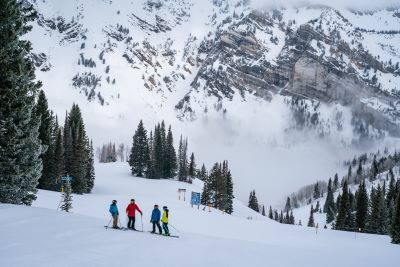
The Little Cottonwood Canyon resorts … Alta and Snowbird … consistently finish right at the top in the "Best Powder" category.
When you see photos of powder skiing in Utah, you might wonder whether they’ve been enhanced. Most likely not. There’s no need to retouch or alter them. It really does look like that.
Nevertheless, as more people come to Utah in search of those perfect powder conditions, it becomes increasingly more challenging to find them. They still exist, but more and more it’s becoming a matter of being in the right place at the right time.
But that’s why you want to keep coming back. Once you experience it, you can’t get enough, even if you don't ski.
Utah's resorts are grouped in several geographic areas. As you can see below and in our links to more info about each resort, there’s a skiing experience for every budget and type of skier.
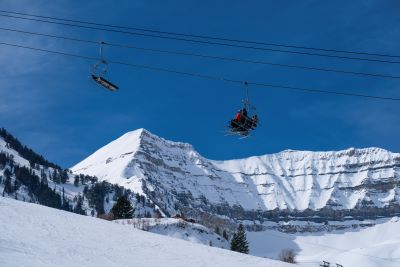
Photo: Travel Utah
Best Places to Stay in Park City
Utah’s Ski Regions & Resorts
Cottonwood Canyons (Salt Lake City)
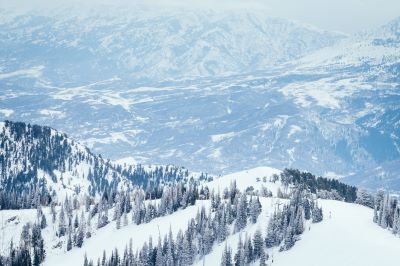
- Little Cottonwood Canyon: Alta and Snowbird share a skyline and the neighborhood. Alta is ski-only and old-school soulful. Snowbird is steep-and-deep with tram laps and big vertical. Both routinely tally around 500 inches in a typical winter. How about 800+ inches only two years ago amidst a "drought".
- Big Cottonwood Canyon: Brighton (Utah’s night-skiing king and a family favorite) and Solitude (Honeycomb Canyon, quieter vibe) sit side by side. Expect a balanced trail mix, mellow-to-rowdy options, and that same Wasatch powder pedigree.
Park City Area
- Park City Mountain is the largest lift-served ski area in the U.S. It is formed by the 2015 interconnect of Park City Mountain Resort and The Canyons (now Canyons Village at Park City). Main Street in Park City is a must-visit.
- Deer Valley … next door … is ski-only, caps daily tickets, and leans five-star with immaculate grooming.
- Woodward Park City rounds it out with a small lift-served hill plus an indoor action-sports hub - great for progression and park-curious families.
Ogden & North
- Snowbasin boasts an Olympic pedigree and offers wide-open groomed trails.
- Powder Mountain has an enormous footprint and deliberately low skier-density. These two anchor the Ogden Valley.
- Nordic Valley is the local’s hill that once wore the “Wolf Mountain” name.
- Beaver Mountain is farther north up Logan Canyon. It is a beloved family-run classic.
- Cherry Peak is a small modern upstart also near Logan.
Provo/Heber
- Sundance ... Robert Redford's former residence ... sits under the dramatic hulk of Mount Timpanogos. It is quieter, artsy, and downright photogenic with night skiing and a growing lift network.
Southern Utah (High Plateau)
- Brian Head (Utah’s highest-elevation base) is on top of the mountain just north of Cedar City. It offers stunning southern Utah views and a laid-back atmosphere. Great for families and progression days.
- Eagle Point is located in the Tushars in southwestern Utah. It is a quiet, higher-elevation escape with steeper surprises and on-mountain lodging.
- These two serve up bluebird powder days, red-rock vistas, and a laid-back scene. Perfect for mixing skiing with a wider Southwest road trip.
Current
Utah Ski Resorts (15)
- Alta
- Beaver Mountain
- Brian Head
- Brighton
- Cherry Peak
- Deer Valley
- Eagle Point
- Nordic Valley
- Park City Mountain
- Powder Mountain
- Snowbasin
- Snowbird
- Solitude
- Sundance
- Woodward Park City
Getting Here
Salt Lake International Airport is served by 14 major airlines. More than 700 flights daily. Whether you fly in from the East Coast, the West Coast or in-between, you’ll be skiing in Utah powder that same day!
And there’s a ski resort for every budget and type of skier. As convenient as it is to get here, it’s equally as convenient to leave. This convenience can give you two more days of vacation compared to many other places you’ll consider.
The 2002 Winter Olympic Games provided unforgettable memories for everyone who saw them or participated in them. They also left behind fantastic facilities and an unparalleled winter playground for people like you to enjoy.
Want nightlife to go with your ski trip? Utah has outgrown its old-school (and often unwarranted) reputation. Visitors from all over the world now enjoy a wide variety of choices to satisfy whatever they are looking for in terms of dining, beverage and atmosphere.
What is it about skiing in Utah that has prompted professionals from LA to New York to move here and take a low-paying job so they can ski every day?
What motivates millionaire businesspeople to travel the world to earn their fortune, only to return to their homes in Park City or Deer Valley, where they can live, play, and enjoy skiing in Utah's powder?
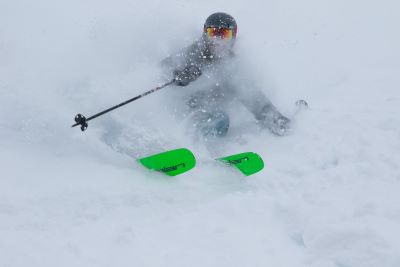
Photo - Travel Utah
Best Hotels in Salt Lake City
Where
to Base
Stay slopeside in the Cottonwood Canyons if your priority is storm chasing and first chair.
Choose Park City for a walkable old-town scene and a huge trail map. It is also notable, as it has been combined with The Canyons, to make one of the largest ski resorts in North America.
Post up in the Ogden Valley if you want room to roam at Snowbasin. Powder Mountain or Nordic Valley (and a calmer pace).
Southern Utah shines for crowd-free weekends and sunny days after storms. A base at Brian Head or Cedar City may be the best option, especially if you’re planning a trip from Las Vegas or southern California.
Heading north to the Logan resorts involves a 2-hour drive from Salt Lake City or a stay near Logan.
Passes
& Tickets
Day tickets vary widely and are dynamic. Buy ahead online to save. Multi-mountain passes (such as Epic, Ikon, Indy, etc.) cover many Utah resorts.
Powder Mountain limits day tickets to keep the skier density low, which many powder hounds love. Check the resort’s site for your dates and fine print.
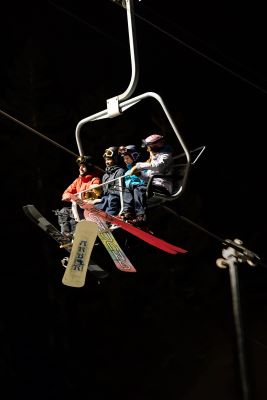
Photo: Travel Utah
When
to Come
Storm doors usually swing open in late November and remain open until April. January - March is prime time for cold storms and that trademark Wasatch fluff.
If you'd like to read an interesting anecdotal post about February snow in Utah (we seem to experience our biggest storms in February), go here.
Early and late season can be sneaky good on the right pattern. Watch the weather reports and be flexible.
Getting
Around
Roads up the Cottonwoods are steep and will be restricted during storms (4WD/AWD or chains). Consider riding up with a friend, a shuttle, or … when in season … the UTA Ski Bus to ease canyon traffic and skip the parking shuffle.
You won’t find me driving up either Cottonwood Canyon in winter, especially on weekends. The traffic is nuts.
Snow Science, Short & Sweet
Want the 30-second version of why our powder skis so well? Cold temperatures, combined with dry air, result in lower snow-to-water ratios. This means lighter flakes with more loft.
The varied terrain funnels that snow into bowls and gullies. And the Great Salt Lake sometimes sparks additional convection, causing intense snowfall (the lake effect) across the central Wasatch.
This combo is why “right storm, right canyon” remains a Utah mantra.
Final Thoughts
Utah is the rare place where you can chase an overnight 2-foot powder dump, ski bell to bell, and still make it home for dinner.
Now, understand that the Utah mountains are not the towering granite peaks of the Rockies that you'll find back home in Alberta. But, in its own way, a Utah ski vacation may be better. At least you don't have to worry about grizzlies.
The mountains are close. The storm cycles are frequent. Terrain variety lets first-timers, cruisers, and powder addicts all have their day.
If you’re plotting one big winter trip, build it around the Wasatch. If you’re piecing together long weekends, Utah skiing makes it easy to keep coming back.
Things to Do in Salt Lake City
Popular Utah Tours


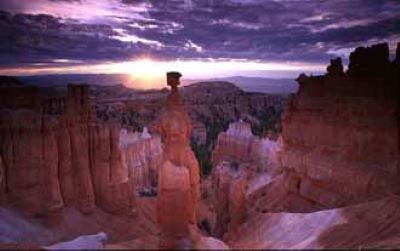
Bryce Canyon National Park
Canyonlands National Park
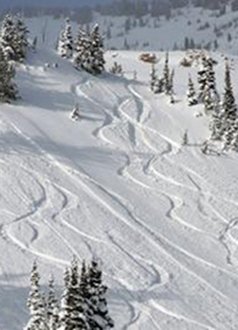
Wasatch Mountains
Lake Powell
Zion National Park
Arches National Park
Great Salt Lake
Monument Valley