That You Were Never The Same?
Salt Lake City
A Guide to Utah's Capital City
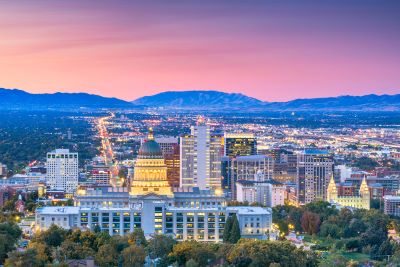
What Do You Notice First?
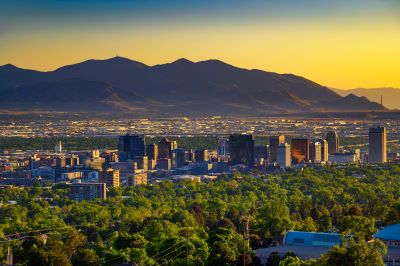
For most people, it's the mountains. And that's understandable. They're almost impossible to ignore.
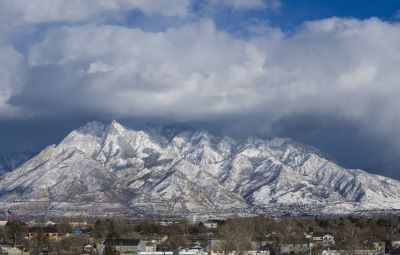
The magnificent Wasatch Mountains rise dramatically from the eastern edge of the Salt Lake Valley. Towering peaks, deep canyons, and rugged ridgelines form a backdrop unlike anything you'll see in most American cities.
Sometimes they're snow-covered well into summer. Other times, they're a brilliant mix of green, gold, and red as the seasons change.
Then, turn around and look west. There's another impressive mountain range on the opposite side. The Oquirrh Mountains stretch along the western side of the valley completing a setting that's pretty hard to beat.
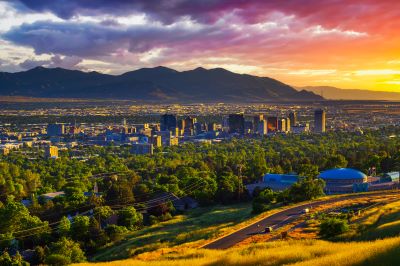
And right in the middle of it all sits Salt Lake City, Utah's capital and largest city.
A place where you can enjoy the amenities of a large metro area while being only minutes away from being able to get away from it all.
Where world-class skiing, hiking, mountain biking, fishing, and other outdoor recreation opportunities are practically right in your backyard.
But there's much more here than mountains and snow.
Salt Lake City has become a lively, interesting, and increasingly diverse place. You'll find excellent restaurants, professional sports, beautiful parks, historic buildings, cultural attractions, and plenty of things to keep you busy.
I've lived in the Salt Lake area for many decades. And although I've traveled extensively throughout Utah and elsewhere, I still appreciate how much this city has to offer.
So whether you're visiting for the first time, planning a Utah ski trip, or simply looking for something different to do, here's my overview of Salt Lake City and what makes it worth your time.
What's With That Grid-Like Layout?
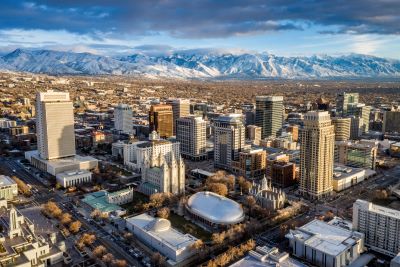
There's something else you'll notice when exploring Salt Lake City. Especially downtown, the streets are wide.
Most of them run straight north and south or east and west. And they seem to stretch forever. It’s a paved grid pattern.
Almost like someone laid out the city with a ruler. Which, in a way, is exactly what happened.
When I first arrived here, I thought the whole system was a little strange. Streets with names like 400 South, 700 East, or 2100 South didn't seem particularly imaginative.
Then I started driving around. Suddenly, it all made sense.
The system begins at Temple Square in the heart of downtown Salt Lake City. The southeast corner of the square is the reference point for the city's original street numbering system.
The farther you travel from that central point, the higher the street numbers generally become. Once you understand the system, finding your way around becomes much easier.
That's something I can't say about every city I've visited.
A City With a Fascinating History
Salt Lake City has a rich history. Although it's closely associated with the Mormon pioneers, its story began long before they arrived.
Native peoples, including the Shoshone and Ute, lived in and traveled through the region for generations. The valleys, rivers, lakes, and surrounding mountains provided important resources long before permanent European-American settlements appeared.
In July 1847, Brigham Young led a group of Mormon pioneers into the Salt Lake Valley.
They were members of The Church of Jesus Christ of Latter-day Saints who had traveled west seeking a place where they could establish communities and practice their religion.
The settlement was originally known as Great Salt Lake City. The word "Great" was eventually dropped.
Utah became the 45th state in 1896, with Salt Lake City serving as its capital.
Over the following decades, mining, railroads, commerce, and industry transformed the once-isolated settlement into an important regional center.
Salt Lake City became known as the "crossroads of the west." Its location made it a natural transportation and commercial hub for much of the Intermountain West.
Today, reminders of its pioneer past are everywhere. Historic churches, older neighborhoods, museums, and beautifully preserved buildings tell the story of how this remarkable city developed.
And it's a story worth exploring.
Salt Lake City Has Changed. A Lot.
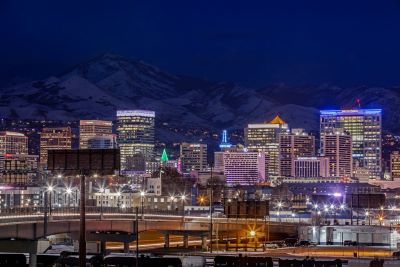
Anyone who visited Salt Lake City a few decades ago might be surprised by what they'll find today. It's a different place.
The city has grown tremendously. So has the surrounding Salt Lake Valley. New businesses, restaurants, hotels, residential communities, and entertainment districts have changed the landscape.
Downtown has become far more lively and interesting. Historic neighborhoods have gained new attention. And a steady influx of newcomers has brought fresh ideas, businesses, and cultural influences.
Not all of those changes have been positive, of course.
There's more traffic. Housing is considerably more expensive than it used to be. And some of those quiet little places locals once enjoyed aren't so quiet anymore.
But there is also a much wider selection of restaurants, shopping, entertainment, and cultural attractions than there was when I first arrived.
Years ago, I read about a visiting Utah Jazz basketball draft choice who was surprised to discover that Salt Lake City was actually a city. Apparently, he'd expected to see cows wandering around.
I'm not sure what he'd heard about Utah. But that ridiculous image of Salt Lake City couldn't be further from today's reality.
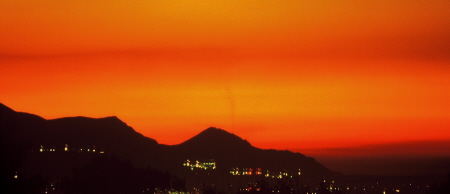
Downtown Salt Lake City - Where It
All
Comes Together
If you're visiting Salt Lake City for the first time, downtown is a good place to start.
It's the center of the city's business, cultural, entertainment, and historic districts. Many of its best-known attractions are within walking distance of one another.
You'll find modern office towers standing alongside historic buildings. Restaurants, shopping centers, hotels, theaters, and public gathering places give downtown an appealing mix of old and new.
Take a walk along Main Street. Explore a few side streets. Stop for lunch at a local restaurant or spend an afternoon shopping at City Creek Center.
And if you're staying at one of the numerous downtown hotels, you can enjoy much of the area without needing a vehicle.
Downtown is also home to Salt Lake City's most famous historic landmark.
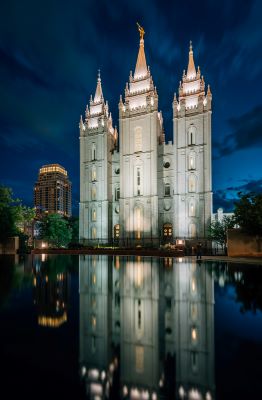
Temple Square
If you’re visiting Salt Lake City and have the time, you might want to at least consider a stop at Temple Square whether you’re LDS or not.
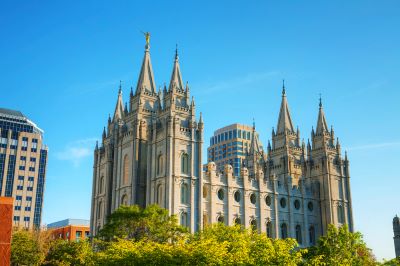
Located in the heart of downtown, it's the historic and spiritual center of the LDS Church. The magnificent Salt Lake Temple, with its distinctive granite walls and six towering spires, has dominated the city's skyline for generations.
Construction began in 1853. According to what they tell us, it took 40 years to complete.
That's an almost unbelievable accomplishment when you consider the equipment and building methods available at the time.
Temple Square has undergone a massive renovation in recent years including earthquake protection for the temple, improvements to surrounding buildings, and redesigned landscaping.
The new Temple Square Visitors' Center is another major addition.
The grounds also include the historic Salt Lake Tabernacle famous for its remarkable acoustics and magnificent pipe organ. The world-renowned Tabernacle Choir at Temple Square is another attraction associated with this historic location.
Across the street, the impressive Conference Center hosts major church gatherings, including General Conference.
You don't have to be a member of the church to appreciate the history, architecture, gardens, and music.
And visiting the public areas is generally free. Just check the official Temple Square website for current access, tour information, and any ongoing construction restrictions.
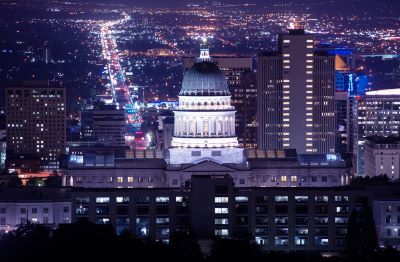
The Utah State Capitol
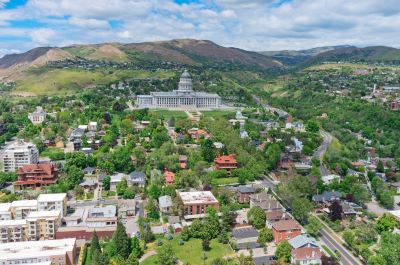
Another landmark well worth seeing is the Utah State Capitol. Sitting prominently on Capitol Hill just north of downtown, the building overlooks the city and the Salt Lake Valley.
Completed in 1916, it's one of Utah's most impressive architectural landmarks.
Its massive columns, beautiful rotunda, murals, and elegant interior make it worth exploring even if you have little interest in government or politics.
But don't limit your visit to the building itself.
Step outside and look south toward downtown. The views are outstanding especially on a clear day when the surrounding mountains are visible.
It's one of my favorite places to recommend to visitors who want a great view of Salt Lake City without committing to a difficult hike.
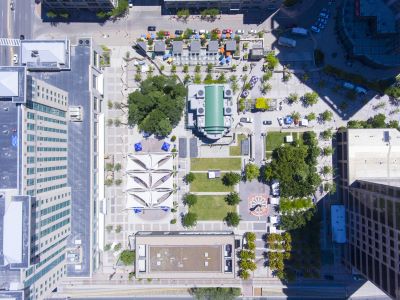
Arts, Entertainment, and Culture
Salt Lake City has a much stronger arts and cultural scene than many first-time visitors expect.
You can enjoy professional symphony performances, ballet, opera, theater, museums, galleries, and live music throughout the year.
The Utah Symphony is one of the city's major cultural institutions. Utah Opera and Ballet West also offer outstanding performances.
The Eccles Theater downtown hosts touring Broadway productions, concerts, and other entertainment.
If you're interested in museums, the Natural History Museum of Utah is one of the best. Located near the University of Utah, its exhibits cover dinosaurs, geology, Native cultures, and Utah's fascinating natural history.
The Utah Museum of Fine Arts, also on the university campus, has an extensive collection of art from around the world.
Downtown, the impressive City Library is worth a visit even if you're not looking for a book.
Its dramatic glass walls, open interior spaces, and distinctive architecture make it one of Salt Lake City's more interesting modern buildings.
And there are plenty of smaller galleries, independent theaters, and cultural venues scattered throughout the city.
You certainly won't run out of things to do.

Salt Lake City Restaurants - Plenty of
Great Choices
Here's another area where Salt Lake City has changed dramatically. Food.
Years ago, the city wasn't exactly famous for its restaurants. You could certainly find a good meal but the choices weren't as varied as they are today.
Salt Lake City's dining scene now includes excellent steakhouses, Italian restaurants, Mexican food, Asian cuisine, Mediterranean restaurants, barbecue, burgers, and just about everything else you can imagine.
Downtown is an especially good place to begin exploring.
You'll find upscale restaurants for a special evening, casual places for a good burger, and numerous locally owned establishments serving excellent food without a lot of fuss.
Some of my local favorites are the simpler places. Restaurants where the food is consistently good, the service is friendly, and you don't feel like you're paying extra just for the atmosphere.
And yes, you can get a drink in Salt Lake City. Despite what some visitors still believe, the city has an active collection of bars, breweries, distilleries, and restaurants serving alcoholic beverages.
Utah still has some unusual alcohol regulations but enjoying a beer, glass of wine, or cocktail isn't the challenge some people imagine. You still have to prove your age, though, even if you’re decades older than the legal age.
I've devoted separate pages on this site to Salt Lake City restaurants, downtown dining, burgers, and local breweries. There's simply too much to cover properly in one overview.
Professional Sports and
The
University of Utah
Salt Lake City has always been an enthusiastic sports town.
The Utah Jazz have been a fixture in the city for decades. Their NBA games at the Delta Center are among the region's most popular sporting events.
And now there's professional hockey.
The Utah Mammoth joined the NHL scene following the arrival of the former Arizona Coyotes franchise in 2024. Their games at the Delta Center have added another major sport to the city's entertainment calendar.
Soccer fans can watch Real Salt Lake which plays its home games in nearby Sandy. The NWSL's Utah Royals also play in the same facility.
Baseball is represented by the Salt Lake Bees, a Triple-A minor league team, now playing at their new ballpark in South Jordan.
And then there's college football.
The University of Utah is a major research and medical university with a passionate following for its athletic teams.
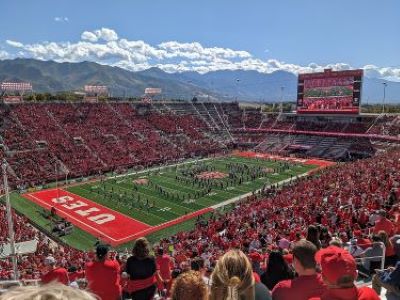
The Utah Utes football program is especially popular.
Rice-Eccles Stadium, located on the university campus, is a great place to watch college football. And the mountain backdrop is pretty hard to beat.
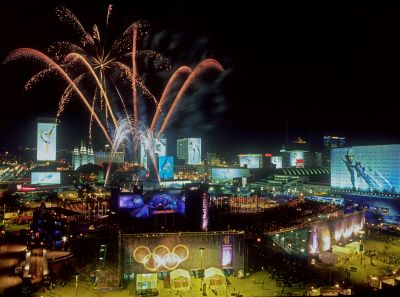
Image - Travel Utah
The Olympic Games Changed Salt Lake
City
One of the most important events in Salt Lake City's modern history took place in February 2002. The Olympic Winter Games.
For more than two weeks, Salt Lake City and the surrounding mountain communities welcomed athletes, spectators, and media representatives from around the world. It was an extraordinary experience.
I was fortunate enough to be living here at the time and I still remember the excitement that seemed to fill the entire region.
The Games took place only a few months after the terrorist attacks of September 11, 2001. It was a difficult time for the country, and the Olympics provided a welcome opportunity to celebrate something positive.
They also changed Salt Lake City.
Transportation improvements, new athletic facilities, accommodations, and international attention helped establish the region as a premier winter recreation destination. Many of those facilities are still being used.
One of the best places to experience that Olympic legacy is Utah Olympic Park near Park City. It features Olympic ski jumps, sliding facilities, museums, and seasonal adventure activities.
And the story isn't finished.
Salt Lake City and Utah are preparing to welcome the world again for the 2034 Olympic and Paralympic Winter Games.
Salt Lake City - A Ski Lover's
Paradise
For many visitors, skiing is the main reason to come to Salt Lake City. And I certainly understand why.
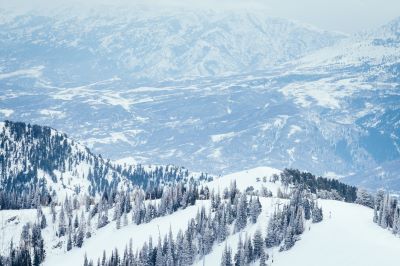
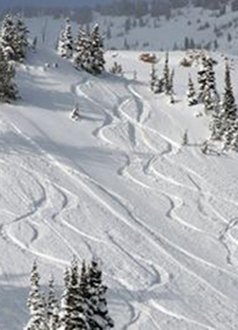
The Wasatch Mountains are famous for producing some of the greatest snow anywhere. Utah even promotes its winter conditions under the slogan "The Greatest Snow on Earth."
There are four major ski resorts in the Cottonwood Canyons southeast of Salt Lake City.
Alta and Snowbird are located in Little Cottonwood Canyon. Brighton and Solitude are in Big Cottonwood Canyon. Each offers something a little different.
Alta is famous for its powder snow and traditional skiing atmosphere. Snowbird attracts skiers and snowboarders who enjoy dramatic terrain and spectacular scenery.
Brighton has a relaxed personality and popular night skiing. Solitude offers beautiful mountain surroundings and some outstanding terrain.
But those aren't your only choices.
Park City Mountain, Deer Valley, Snowbasin, and several other resorts are also within reach of the Salt Lake metropolitan area.
That's one of the great advantages of staying in Salt Lake City during a ski vacation.
You can enjoy a different resort each day and then return to the city for dinner and entertainment. There is one important qualification, however.
The Cottonwood Canyons can become extremely busy during major storms, holidays, and popular weekends. Snow, avalanche-control operations, limited parking, and heavy traffic can create significant delays.
Plan ahead and check road conditions.
For much more information, take a look at my individual pages on Utah's ski and snowboard resorts.
Outdoor Recreation Isn't Just About
Winter
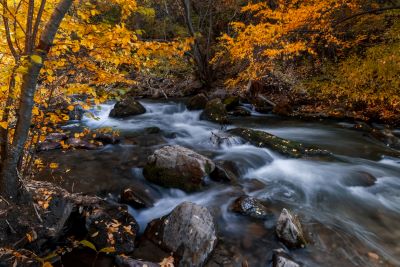
Don't make the mistake of thinking Salt Lake City is only a winter destination. Summer and fall are outstanding times to visit.
Hiking, cycling, mountain biking, fishing, rock climbing, and golf are all popular activities.
Big Cottonwood Canyon and Little Cottonwood Canyon offer spectacular scenery, picnic areas, mountain lakes, and hiking trails ranging from easy walks to demanding climbs.
Emigration Canyon, east of the city, is another favorite for scenic drives, cycling, and hiking.
The Bonneville Shoreline Trail follows portions of prehistoric Lake Bonneville's ancient shoreline along the foothills. It's popular with hikers, runners, and mountain bikers.
The Jordan River Parkway Trail offers a less demanding route for walking and cycling through the valley.
And if you enjoy golf, there are numerous excellent public courses throughout the Salt Lake area. Sometimes, during the right spring conditions, you can ski in the morning and play golf in the afternoon.
How many places can offer that?
Of course, outdoor recreation comes with some responsibilities.
Mountain weather can change quickly. Summer heat can be intense in the valley. And trails that look relatively easy on a map can be much more demanding than expected.
Choose activities suited to your experience, carry adequate water and appropriate gear, and check conditions before heading out.
There's no reason to be afraid of enjoying Utah's outdoors. Just use common sense.
Family Attractions, Parks, and
Gardens
Salt Lake City is also a great destination for families.
Utah's Hogle Zoo, located near the mouth of Emigration Canyon, is one of the area's best-known attractions.
Nearby, This Is the Place Heritage Park recreates aspects of Utah's pioneer past through historic buildings, exhibits, demonstrations, and family activities.
The Natural History Museum of Utah is another excellent choice for visitors of all ages.
For something a little less structured, explore some of the city's beautiful parks.
Liberty Park is still a favorite of many people as long as you go there during the day. Its mature trees, walking paths, open spaces, and Tracy Aviary make it a pleasant place to spend an afternoon.
Sugar House Park is another popular destination for walking, picnicking, and simply enjoying the outdoors.
And Red Butte Garden, near the University of Utah, offers beautiful landscaped grounds, walking paths, and seasonal events.
You don't need to spend a fortune to have a good time in Salt Lake City. Some of the most enjoyable activities are also among the simplest.

The Great Salt Lake - An Unusual
Natural Wonder
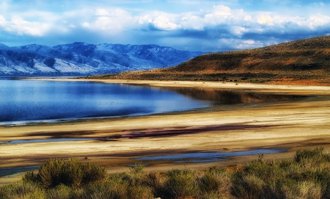
You can't talk about Salt Lake City without mentioning the lake that gave the city its name. The Great Salt Lake lies west and northwest of the metropolitan area.
It's one of the most unusual bodies of water in North America. A vast, shallow saltwater lake surrounded by mountains, wetlands, desert landscapes, and open sky.
Because the lake has no outlet to the ocean, salts and minerals accumulate as water evaporates. The result is water that's much saltier than ordinary seawater in many parts of the lake.
It's also one of the most important migratory bird habitats in the western United States.
One of the best places to experience the area is Antelope Island State Park on the lake's southeastern side. The island offers beautiful scenery, hiking trails, wildlife viewing, and some spectacular sunsets.
Bison are one of its best-known attractions. The Great Salt Lake isn't a typical recreational lake. Water levels, shoreline conditions, insects, and access can vary considerably.
If you're expecting a traditional beach vacation, you may be disappointed. If you enjoy unusual scenery, wildlife, photography, and wide-open spaces, it's well worth visiting.
saltlake
Festivals, Events, and Things to Do
Something is happening in Salt Lake City during almost every season.
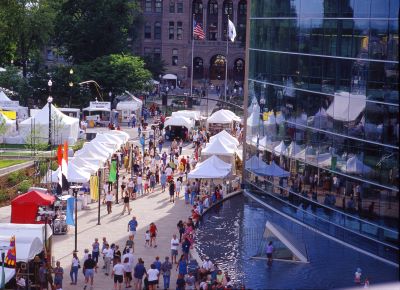
Summer brings outdoor concerts, markets, festivals, and community celebrations.
The Utah Arts Festival is one of the city's major annual cultural events.
The Downtown Farmers Market at Pioneer Park is another favorite. During its regular season, you'll find fresh produce, locally made products, food vendors, and a lively community atmosphere.
The city also hosts professional sporting events, Broadway productions, concerts, conventions, and numerous holiday activities. Before you visit, check an up-to-date events calendar.
You may discover something happening during your stay that you hadn't even considered. And sometimes those unexpected experiences turn out to be the best part of a trip.
Getting To and Around Salt Lake City
One of Salt Lake City's biggest advantages is how easy it is to reach.
Salt Lake City International Airport is located just west of downtown. Under normal traffic conditions, it's a relatively short drive into the city.
The airport serves as a major aviation hub with flights operated by major airlines throughout the United States and beyond.
An extensive redevelopment project has transformed the airport into a modern facility with expanded terminals, passenger services, shops, and restaurants.
Salt Lake City is also served by major interstate highways, including Interstate 15, Interstate 80, and Interstate 215.
Once you arrive, getting around is fairly straightforward.
The Utah Transit Authority operates the region's public transit system including TRAX light rail, buses, and FrontRunner commuter rail.
TRAX connects the airport with downtown and serves numerous destinations throughout the Salt Lake Valley. There's even a Free Fare Zone within part of downtown.
If you're staying downtown and mainly visiting city attractions, you may not need a rental car.
But if you're planning to explore the mountains, ski resorts, state parks, or more distant attractions, having a vehicle is a given.
Remember that winter driving in the Wasatch Mountains is very different from driving around downtown. Be prepared for changing weather and road conditions.

Image - Polar Bear Underwater at Hogle Zoo
When Is the Best Time to Visit
Salt
Lake City?
There's no single best time to visit Salt Lake City. It depends on what you want to do.
Spring brings flowering trees, warming temperatures, and improving hiking conditions in the valley. Snow often remains deep in the higher mountains.
Summer is ideal for sightseeing, mountain hiking, fishing, cycling, and outdoor festivals.
Just remember that the valley can get hot. Temperatures sometimes climb into the upper 90s or higher during July and August.
Fall is my favorite time of year in northern Utah. The days are often pleasant, the mountain scenery is spectacular, and the changing leaves create some beautiful displays.
Winter brings the ski season, snow-covered mountains, and holiday activities.
But Salt Lake City does experience winter temperature inversions. During certain weather patterns, cold air traps pollution in the valley, reducing visibility and sometimes creating unhealthy air quality.
Every season has its advantages. And that's one of the reasons Salt Lake City appeals to people who enjoy an active outdoor lifestyle.
Salt Lake City Is Your Gateway to
Utah
One of the things I appreciate most about Salt Lake City is its location. You're not limited to what you can do within the city itself.
Drive east and you're in the Wasatch Mountains. Head north and you can explore Ogden, Logan, and other destinations in northern Utah.
Travel south and you'll find Provo, Utah Lake, and the scenic communities along the Wasatch Front.
Park City is a relatively short drive away, with its historic Main Street, ski resorts, restaurants, and year-round recreation opportunities.
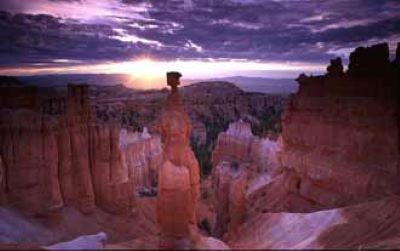
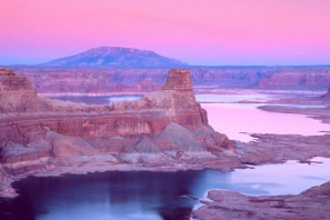
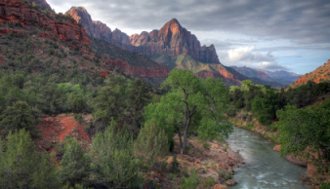
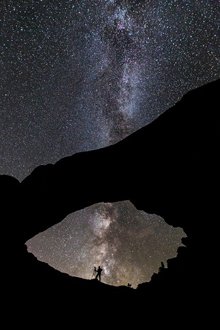
And if you have more time, Salt Lake City is an excellent starting point for exploring southern Utah. But, bear in mind that the state's five national parks — Zion, Bryce Canyon, Capitol Reef, Arches, and Canyonlands — are all several hours away.
They're not casual afternoon outings from the city. But with a little planning, you can combine a visit to Utah's capital with some of the most spectacular scenery in North America.
Is Salt Lake City Worth Visiting?
Absolutely. And not just because I live in the area.
Salt Lake City offers something that isn't easy to find in many other places. You get the conveniences of a substantial city, along with access to extraordinary mountain scenery and recreation.
You can spend the morning hiking in the Wasatch Mountains, enjoy lunch at an excellent restaurant, explore a museum in the afternoon, and attend a professional sporting event or theater performance that evening.
Or you can do none of those things.
Just wander through a historic neighborhood. Relax in a park. Take a scenic drive. Enjoy the mountains without feeling compelled to climb them.
There's no shortage of possibilities.
Of course, not everything is perfect.
Traffic has gotten to the point where it is, at times, almost grid-locked. That’s not fun.
Popular recreation areas will get crowded. Prices … for everything … have gotten to the point of ridiculous. And some of the changes brought on by rapid growth have made life a lot more expensive and a lot less pleasant for longtime residents.
But the fundamental appeal of Salt Lake City remains.
It's a place where an active outdoor lifestyle and the comforts of a modern metropolitan area come together. I've had the opportunity to enjoy that combination over the years. It's something I still appreciate.
Whether you're here for a weekend, a family vacation, a business trip, or a longer visit, I think you'll find plenty of reasons to enjoy Utah's capital city. You may even find yourself wondering what it would be like to live here.
I know the feeling. After all, that's what happened to me


Bryce Canyon National Park
Canyonlands National Park
Wasatch Mountains
Lake Powell
Zion National Park
Arches National Park
Great Salt Lake
Monument Valley