That You Were Never The Same?
The Definitive Guide to The
Top Utah Attractions
One of The Most Scenic
States In America
If you want the definitive guide to the top Utah attractions, this is the right place to start. Utah is one of the best travel states in America and that’s not hype. It’s just true.
You can spend one trip in southern Utah chasing cliffs, arches, and overlooks. Then come back for lakes, mountain towns, museums, and historic buildings.
Then you can visit for some of the best winter sports in the country. And come back again for small towns, hot springs, and scenic roads you somehow missed on your previous visits.
That’s what this page is about.
In this article, I group the big names with some lesser-known stops so you can see how the state really fits together.
Some of these places are famous around the world. Some are quieter. All of them belong in the conversation.
And yes, these top Utah attractions really are worth your time.
Why Utah Stands Out
Utah gives you variety. You’ve got amazing national parks. You’ve got Utah state parks that are every bit worth the stop.
You’ve got lakes, overlooks, museums, Olympic venues, mining history, wildlife areas, cultural sites, and long scenic roads that almost count as attractions by themselves.
That matters because not every visitor wants the same trip.
Some people want nonstop outdoor adventures. Some want scenic overlooks and easy access. Some want a mix of family fun, museums, and short walks.
Others want a polished base in Park City or St. George and day trips from there. Utah can do all of that.
That’s why the definitive guide to the top Utah attractions can’t just be a list of national parks.
The state is bigger than that. Better than that too.
The National Parks That Define Utah
Let’s start with the obvious stars.
For many visitors, the best-known Utah attractions are the national parks. And fair enough. Utah’s red rock country is one of the great scenic regions in the United States.
Zion National Park
Zion National Park is one of those places that lives up to the buildup.
The canyon walls rise straight up. The river softens the landscape just enough. The scenery feels dramatic, but it also feels welcoming.
That’s one reason Zion works so well for first-time visitors.
It’s a great place for people who want a classic Utah experience. You can hike, take a shuttle, enjoy the viewpoints, and just soak in the scale of the place.
Zion has the kind of scenery people remember for the rest of their life. If you’re building a first Utah itinerary, this is one of the best things you can include.
Bryce Canyon National Park
Bryce Canyon National Park is different.
It’s not about one deep canyon in the usual sense. It’s about hoodoos, color, light, and layers.
The viewpoints are spectacular. The amphitheater is unforgettable. Sunrise and sunset can feel almost unreal. A wonderful hiking area.
Bryce is also a smart stop for travelers who want a big payoff without a huge physical commitment. You can see a lot just from the rim a few feet from your vehicle.
That makes it a perfect place for mixed-age groups, casual sightseers, and anyone who wants beauty without working too hard for it.
Arches National Park
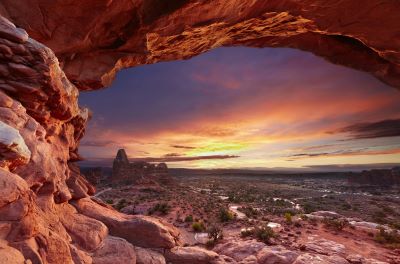
Arches National Park is one of the signature Utah attractions for a reason.
This is where many people first picture Utah in their minds. Red sandstone. Open sky. Rock fins. Natural arches everywhere.
And, of course Delicate Arch which is the best-known of them all.
Even the drive through Arches National Park is memorable. You don’t have to be a serious hiker to enjoy it.
There are easy viewpoints, moderate walks, and longer hikes if you want more. If you love red rock canyons, desert views, and iconic photo stops, Arches belongs near the top of your list.
Canyonlands National Park
Canyonlands National Park feels wider and wilder.
This is the park of sheer scale. Huge overlooks. Vast mesas. Deep canyons.
A lot of space and silence. It doesn’t feel quite as concentrated as Arches or Zion but that’s part of the appeal.
For travelers who want more than just the headline stops, Canyonlands is one of the strongest Utah attractions in the state.
It rewards people who like big views and a little breathing room.
Capitol Reef National Park
Capitol Reef National Park may be the most overlooked of the Mighty 5.
That’s not because it lacks scenery. It’s because it feels calmer. More spread out. A little less talked about.
And honestly, that’s part of the charm.
Capitol Reef combines cliffs, domes, orchards, pioneer remnants, and the remarkable Waterpocket Fold.
It’s one of the best places in Utah for travelers who want beauty without the same level of rush they may find elsewhere.
It also connects beautifully with some of Utah’s best drives.
Other Major Natural Wonders in Utah
The national parks get the headlines. But they’re not the whole story. Some of the best Utah attractions sit outside the park system.
Grand Staircase-Escalante National Monument
Grand Staircase-Escalante National Monument is big, remote, and full of possibilities.
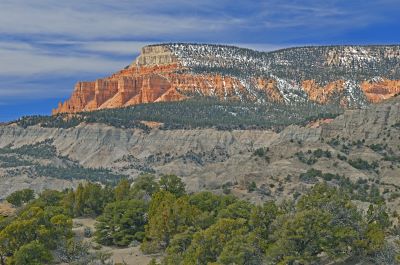
This is a place for travelers who like the feeling of discovery. You’ve got slickrock, slot canyons, cliffs, badlands, and long backroads that pull you deeper into the landscape.
The natural beauty here feels raw and open. It’s also one of the best places in Utah to appreciate how much wild country still exists between the better-known destinations.
What would you expect from the last mapped region in the continental USA?
Dinosaur National Monument
Dinosaur National Monument gives Utah something many states can’t match.
It mixes scenery with science and wonder. The biggest draw is the wall of real dinosaur fossils which makes it one of the most memorable family stops in the region.
If you’re traveling with kids, this is an easy one to recommend.
Even for adults, there’s something powerful about standing in front of ancient bone beds and realizing you’re looking at the deep past of the American West.
Bonneville Salt Flats
The Bonneville Salt Flats don’t look like anywhere else in Utah. Or anywhere else, period.
The landscape is stark, bright, open, and strangely beautiful. There isn’t a long list of activities here.
That’s not the point. The point is the feeling.
The sky. The distance. The emptiness. The strangeness of standing out there and realizing how unusual this place really is.
That makes the Bonneville Salt Flats one of the most distinctive Utah attractions in the state.
Lake Powell
Lake Powell adds a whole different dimension to Utah travel.
Instead of dry desert scenery alone, you get blue water, marinas, sandstone walls, boating, paddling, and warm-weather recreation. It’s a good counterbalance to a red rock itinerary.
For many travelers, Lake Powell turns a hiking-heavy trip into a more relaxed houseboating vacation. It’s a smart stop on a longer road trip through the region.
The Best State Parks in Utah
Visitors who focus only on the national parks often miss some of the more amazing stops in the state.
Utah has a deep bench of excellent state parks.
Some are scenic overlook parks. Some are water parks. Some protect history.
Some are built around geology, wildlife, or recreation. Taken together, the Utah state parks add real depth to any trip.
Deadhorse Point State Park
Deadhorse Point State Park has one of the most spectacular viewpoints in Utah.
That’s the big reason to go. You step out and the land simply drops away beneath you. The overlook is massive, dramatic, and instantly memorable.
This is one of those places that photographs well but feels even better in person. It’s also a fine stop for sunset, short walks, picnic areas, and nearby mountain biking.
Goosenecks State Park
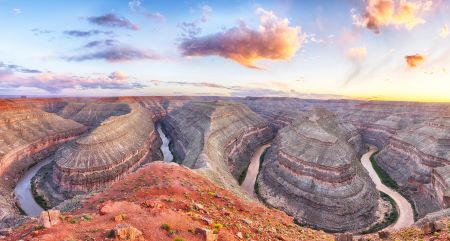
Goosenecks State Park is smaller … and seemingly in the middle of nowhere … but the view is absolutely stunning.
The river twists below in tight loops carved into the earth. It’s simple, direct, and breathtaking.
You don’t need a huge visitor center or a long trail network when the overlook is this good.
If you’re exploring southeastern Utah, Goosenecks State Park is well worth the detour.
Bear Lake
Bear Lake shows a softer, brighter side of Utah.
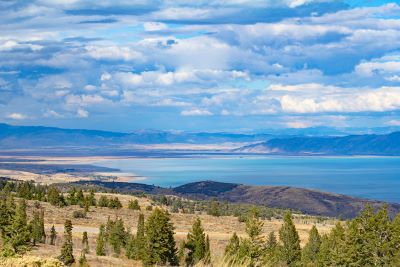
This is one of the best warm-weather Utah attractions for beaches, boating, and classic summer family fun. The color of the water catches people off guard the first time.
It looks almost tropical on a good day. For families, couples, and anyone who wants a break from desert heat, Bear Lake is a strong choice.
More Utah State Parks Worth Seeing
Utah’s state park system goes much deeper than just those few.
- Snow Canyon near St. George is one of the best red rock parks in southwest Utah.
- Antelope Island is one of the best places to experience the Great Salt Lake.
- Goblin Valley is just plain fun. And unique.
- Kodachrome Basin is quieter and full of color.
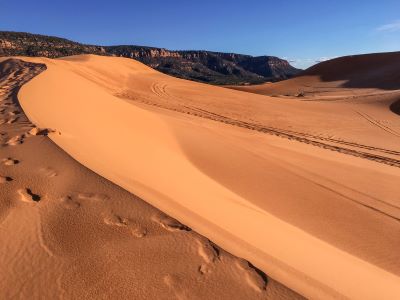
- Coral Pink Sand Dunes adds another completely different desert texture.
If you’re planning a broader itinerary, don’t skip the Utah state parks. They often give you easier logistics and just as much or more reward.
Scenic Drives and Utah Scenic Byways
Some of the best Utah attractions aren’t single stops. They’re the drives between them.
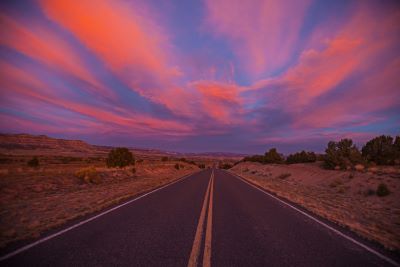
Utah is one of the best states in America for scenic drives. The roads pass through mountains, forests, desert basins, cliffs, and tiny towns that become part of the experience.
That’s why the official Utah scenic byways system matters so much.
Scenic Byway 12
If I had to point first-time visitors to one classic scenic route, Scenic Byway 12 would be near the top.
It links Bryce Canyon National Park with Capitol Reef National Park and passes through some of the most beautiful land in the state. This drive works on its own, not just as a connector.
That’s why I consider it one of the true Utah attractions. This one of our favorite road trips in the entire state.
You’ll pass overlooks, slickrock landscapes, forests, open country, and a couple of appealing small towns. It’s the kind of road that turns a simple transfer day into the highlight of the trip.
Other Scenic Drives Worth Your Time
Utah has more than one great drive.
- The routes around Moab are excellent.
- The Alpine Loop is a favorite in the fall.
- The drive through Zion is memorable.
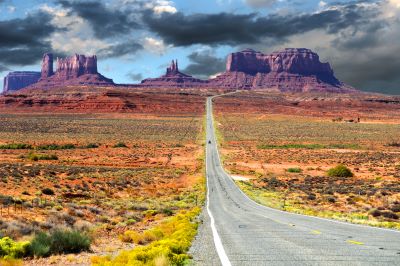
- So is the approach to Monument Valley in the extreme far south of the state. And Monument Valley itself is spectacular.
- In northern Utah, mountain highways open up a very different side of the state.
- Near Salt Lake City, Guardsman Pass is easily accessible and worth the time.
A Utah trip doesn’t always have to be point A to point B. Sometimes the best version is a round trip or loop where the drive itself is part of the reason to go.

Salt Lake City Attractions Worth Adding
A lot of visitors fly in and head south right away.
I get it. But if you do that every time, you’ll miss some of the most interesting urban Utah attractions in the state.
Temple Square and Downtown Salt Lake
Temple Square is one of the best-known landmarks in Utah.
It matters as a religious site, a civic landmark, and part of the state’s larger story. It also anchors one of the easiest sightseeing areas in Salt Lake City.
Nearby, the Utah State Capitol Building is another must-see. It’s one of the state’s finest public buildings and an important historic site. The architecture is impressive and the hilltop setting gives you wide views over the valley.
The Cathedral of the Madeleine adds another layer. It’s one of the most beautiful churches in the West and one of Salt Lake City’s most memorable historic buildings.
Museums and Cultural Sites
Salt Lake City also delivers on museums.
The Natural History Museum of Utah is one of the best indoor stops in the state. If you want to understand Utah’s landscapes, peoples, and prehistoric past, this is the place. It’s especially strong on geology and ancient life.
Just don’t chew gum inside this building. There’s a Curator of Compliance who very aggressively enforces the no-gum policy.
Then there’s the Utah Museum of Fine Arts which gives visitors a broader art and global culture experience. Both of these are excellent cultural sites and smart additions if you want more than just scenery on your trip.
Family Attractions and Easy City Stops
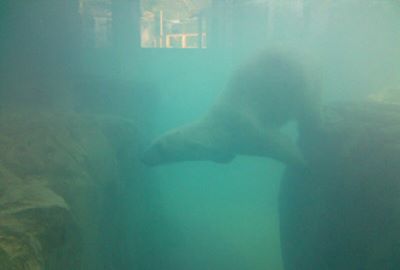
For families, Hogle Zoo is still one of the easiest recommendations along the Wasatch Front. It was a family favorite of ours for years as our kids were growing up. In the last couple decades, many of the animal enclosures and facilities have been impressively upgraded.
Gardner Village offers shops, local flavor, and a unique charming setting. If you want an outing with easy access and a relaxed pace, it works well.
Salt Lake City also has beautiful gardens including Red Butte Garden and Arboretum. Covering more than 100 acres, it can add a quieter and more colorful stop to a city day. It’s located right next to the University of Utah.
And if you want a completely different kind of attraction, the Bingham Canyon Copper Mine is one of the most unusual in Utah. A guided tour or overlook visit there adds industry, engineering, and mining history to the mix.
Park City and Utah’s Winter Side
Utah is not only a spring and fall destination. It shines in winter too.
Park City
Park City is one of the most polished mountain towns in the West.
It works year-round but winter is when it really draws attention. The town combines lodging, restaurants, trails, shopping, and mountain scenery in a way that appeals to travelers who want both comfort and activity.
In summer, it’s excellent for hiking and mountain biking. In winter, it becomes one of the main centers for snow travel in the state.
The only downside is that this formerly sleepy little ski town is now bursting at the seams and the crowds may, at times, be too much for some.
Ski Resorts and Winter Sports
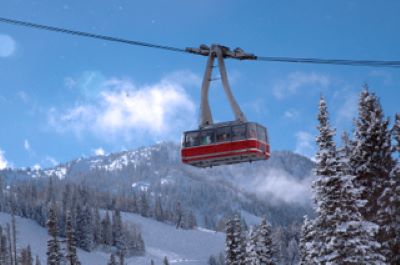
Utah’s ski resorts are a major part of its appeal.
They give travelers different styles and a range of terrain. That matters because every visitor has a different skill level.
Some want easy cruising. Some want steeper terrain. Some just want a good lodge and a scenic ride. Utah does a very good job serving all of them with resorts such as:
That’s why the state remains one of the best destinations in America for winter sports.
Utah Olympic Park and Utah Olympic Oval
The 2002 Winter Olympics left Utah with more than memories.
Utah Olympic Park in Park City is still one of the most distinctive attractions in the state. It gives visitors a direct connection to Olympic history and a chance to see where elite athletes trained and competed.
The Utah Olympic Oval carries that legacy on the west side of the Salt Lake Valley. Together, these sites remind visitors that Utah is not just about red rock. It is also one of the great mountain sports states in the country.

Easy Stops, Family Fun, And
Lower-Effort Attractions
Not every Utah trip needs to be a test of endurance.
Sometimes the best days are the simplest ones.
Bridal Veil Falls
Bridal Veil Falls is a great example. It’s just a couple of miles up Provo Canyon.
It’s scenic, accessible, and easy to work into a northern Utah outing. There’s a convenient parking area and the waterfall is close to the city of Pro.
The whole stop works for families, couples, and older travelers. If you want beauty without a huge time commitment, this is a strong pick.
Great Salt Lake and Antelope Island
The Great Salt Lake is one of Utah’s defining features. It is the largest salt lake in the western hemisphere (although it is shrinking at a scary pace thanks to our latest drought).
It’s unusual. It’s historic. It’s scenic in a quiet way. Depending on the year, it can be two to eight times saltier than seawater.
It’s the 33rd to 35th largest lake in the world by surface area depending on how much snow fell in our mountains that preceding winter.
Nearby Antelope Island (mentioned earlier) adds wildlife, views, and the chance to experience the lake on a broader scale. Together, they make a very worthwhile northern Utah outing.
History, Culture, And
The Quieter Side of Utah
Utah has scenery, no question. But it also has rich history.
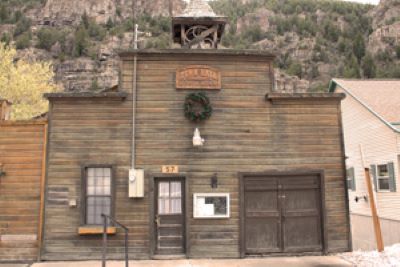
That includes mining history, Native American history, pioneer stories, railroad heritage, and old communities that rose and fell with changing times. There are excellent museums, preserved districts, churches, and public buildings.
There are also Ghost towns in Utah that hint at how much life and ambition once moved through places that now sit mostly still. Why include them here? Because they’re an integral part of the state’s history.
That’s part of what makes the state more interesting than many visitors expect.
A good Utah trip could include at least one scenic stop, one city stop, and one meaningful historical or cultural stop. That combination gives the state more shape and context.
Planning The Right Utah Trip For You
You don’t need to see everything at once. In fact, there’s no chance that you can.
If this is your first visit, start with a few icons. Zion. Bryce. Arches. One or two scenic overlooks.
Maybe a scenic byway. Maybe one of the best state parks nearby. That’s enough to make the trip memorable.
If you’ve been here before, widen the map. Add Grand Staircase-Escalante National Monument.
Add Dinosaur National Monument. Add Bear Lake.
Add Salt Lake museums. Add Goosenecks State Park or Deadhorse Point State Park. Build the trip around regions instead of trying to race from one famous stop to another.
And remember the practical side. Salt Lake City International Airport makes much of Utah easier to reach than people often realize.
That’s one reason a Utah trip can be anything from a quick long weekend to a full-scale road trip across the state.
Best Times to Visit Utah Attractions
The best times depend on what you want.
Spring and fall are usually ideal for the red rock parks and desert touring.
Summer is strong for mountain escapes, lakes, and family vacations.
Winter is when Park City, the Olympic venues, and the larger ski scene step forward.
There really isn’t one season that owns Utah. That’s part of the appeal.
You can visit for snowy peaks, desert blooms, summer water, fall color, or long scenic driving days. It all works.
You just need to match your itinerary to the season.

Final Thoughts on The
Top Utah Attractions
Utah is not a one-note destination. In fact, that’s what this entire website is about. Utah attractions.
It has cliffs and lakes. Museums and overlooks. Olympic venues and old churches.
Desert solitude and lively mountain towns. It has world-famous parks and quieter places that surprise people just as much.
If you’re looking for the definitive guide to the top Utah attractions, hopefully this article helps.
Start with the national parks. Add the best Utah state parks. Make time for the city attractions. Drive some of the great roads. Leave room for a few surprises.
That’s when Utah gets really good.
And that’s when most visitors start planning the next trip before the first one is even over.