That You Were Never The Same?
Utah's Territorial Statehouse
State Park Museum

Photo: Travel Utah
An Interesting, Historic I-15 Travel Stop
Utah’s Territorial Statehouse State Park Museum is one of the more interesting historic stops along I-15 in central Utah.
It’s not a lake park. It’s not a hiking park. It’s not a place where you go boating, camping, fishing, or riding off-road machines.
But it is one of the most important historic sites in Utah.
Territorial Statehouse State Park Museum is found in Fillmore, Utah roughly halfway between Salt Lake City and St. George. For many travelers, Fillmore is a fuel and food stop on the way to somewhere else.
That’s easy to understand. But it’s also easy to miss something special.
Just a few minutes from the freeway, you’ll find the old Utah Territorial Statehouse. It’s the oldest existing governmental building in Utah and it tells one of the most important early stories in the state.
This is where Utah’s first capitol dream began. And this is where that dream changed direction.

Utah’s First Capital Wasn’t Salt Lake City
Most people naturally think of Salt Lake City when they think about early Utah government. That only makes sense.
Salt Lake City, of course, became the center of population, business, religion, and government in Utah. But before that happened, Fillmore was originally chosen as the original seat of government for the Utah Territory.
That surprises a lot of people when they first hear it. It also makes this small museum much more interesting than it first appears.
Brigham Young and other early leaders wanted a capital city near the geographic center of the territory. Fillmore was selected in the early 1850s.
The town was named after President Millard Fillmore. In fact, Millard County was named after him as well.
The plan at that time was ambitious. The Utah Territorial Statehouse was designed to be a large capitol complex with four wings and a central dome.
It would’ve been the heart of government for the Utah Territory but only the south wing was ever completed. That south wing is the museum building you visit today.
In a way, that makes the Territorial Statehouse State Park Museum even more interesting. You’re not just looking at an old building. You’re looking at the only finished piece of a much bigger plan.

Why the Capital Moved Back North
The Statehouse was finished enough for the Utah territorial legislature to meet there in 1855. That was a big moment for Fillmore.
For a short time, this small central Utah town really was the center of territorial government. But the location created problems.
- The town was still remote.
- Travel was difficult.
- Housing was inadequate.
- Services were limited.
- Communication was slow.
The town simply was not ready to operate as the practical capital of a large and growing territory.
Utah territorial legislation was conducted there for only a short time. But by late 1856, the seat of government returned to Salt Lake City. That gives Territorial Statehouse State Park Museum a quiet feeling of “what might have been”.
Fillmore could’ve become Utah’s capital city. Instead, it became a preserved historic stop with a still interesting story that most people just drive right by.

Image: Travel Utah
What’s Inside the Museum?
Territorial Statehouse State Park Museum is not large and that’s part of its appeal. You can enjoy it without blocking off hours.
You can stop, walk through the exhibits, stretch your legs, and learn something useful before getting back on the road. Inside the museum building, you’ll find exhibits connected to pioneer life, territorial politics, early government, and the settlement of central Utah.
The displays help tell the story of Mormon pioneers, early lawmakers, and the difficult work of building communities in a rugged western territory. The second floor is especially worth seeing.
It gives you a better feel for the old legislative space and the early workings of government in Utah. It’s not grand in the way modern capitol buildings are. Not even close.
It’s smaller, plainer, and more direct. That’s part of its charm. This was government being built in real time. In a place that was still raw, remote, and uncertain.
More Than Just One Historic Building
The Statehouse is the main attraction but the grounds add quite a bit to the visit.
You’ll also find restored pioneer buildings, historic displays, and pleasant outdoor areas that make this a nice stop for families, couples, and road-weary travelers.
It’s the kind of place where you can slow down for a little while and let the story of early Utah settle in if you fancy that kind of thing.
The Daughters of the Utah Pioneers played an important role in helping preserve the old Statehouse. This was important as many historic buildings disappear before people fully understand their value.
This one survived. It was restored, protected, and eventually became part of Utah’s state park system. Because of that, you can still stand inside the old south wing and try to imagine what Fillmore might have become.

A Good Stop Along I-15
If You Like History
Fillmore is one of those towns most people drive past without thinking much about it. I understand that. There’s not much else there.
When you’re on I-15, you’re usually headed somewhere. Maybe you’re driving south toward St. George, Cedar City, Zion, or Las Vegas. Maybe you’re headed north toward Salt Lake City, Provo, or home.
Either way, Fillmore is usually just a blur as you speed by on I-15 at 80 MPH+. Territorial Statehouse State Park Museum gives you a good reason to stop and pull off the freeway.
It’s close to I-15. It’s easy to find. It doesn’t require a long detour. And it gives you something more memorable than another quick stop for gas and snacks.
This is a good stop if you happen to be one of those who are actually interested in things to do in the Fillmore area. It’s also a necessary stop if you’re trying to visit all 46 Utah state parks like me.
And it’s a good stop if you enjoy Utah history, pioneer stories, old buildings, and small towns with a past.
What Makes Territorial Statehouse
State Park Museum Different?
Territorial Statehouse State Park Museum is different from many of Utah’s state parks.
- There is no reservoir here.
- There is no campground.
- There is no major trail system.
- There is no big overlook or red-rock canyon.
This is a history park. That’s what makes it unique.
Utah’s state parks are wonderfully varied. Some are built around water, like Sand Hollow, Yuba, and many others.
Some are built around scenery. Some are known for camping, hiking, or mountain bike trails.
Some, like Green River State Park, even let you take on the challenge of a nine-hole golf course.
Others, like the clear waters of Jordanelle State Park, have distinct recreation areas with different ways to enjoy the same park.
Territorial Statehouse State Park Museum is different. Its main attraction is the story.
It may not be a popular recreation spot in the usual sense, but it’s a meaningful historic stop. It helps explain how Utah grew from a remote territory into a state.
And it shows how much effort, ambition, and uncertainty shaped those early years. That kind of history takes years to fully appreciate but you can get a good start in an hour.

Image - Travel Utah
Is It Worth Visiting?
Yes. If you like history. Especially Utah state history. If you don’t, it’s probably not for you.
Territorial Statehouse State Park Museum is definitely not flashy. It’s worth comes from giving you a better understanding of early Utah. And it does so in a simple, direct, and memorable way.
The building itself is the reason to go.
- You’re standing inside the only completed wing of Utah’s first planned capitol.
- You’re seeing the old south wing of a much larger dream.
- You’re walking through a building where early Utah government briefly took shape.
- And you’re doing it in a town many travelers don’t realize was once intended to become Utah’s state capital.
That makes this a popular destination for history lovers, state park collectors, families, and travelers who enjoy finding places that are easy to overlook.
It’s not a big adventure stop. It’s a small-place, big-story stop. Utah has a lot of those.

Park Information and Fees
The park is generally open during daytime hours but hours and fees can change by season, staffing, holidays, and special events. Before you go, check the official Utah State Parks website or call the museum directly.
That’s especially smart if you’re planning a group visit, school visit, family trip, or special stop during a longer road trip.
Final Thoughts
The Territorial Statehouse State Park Museum is one of those Utah places that certainly isn’t going to impress you with size. But maybe it will with its simple narrative.
The old stone building still stands in Fillmore quietly telling the story of Utah’s first capital, the ambitions of early leaders, and the unfinished original plans that left only one wing behind.
If you’re driving I-15 through southwest Utah, it might be worth the stop. Especially if, as I said earlier, you enjoy slowing down and seeing old historical places.
Walk through the museum. Look at the old stonework. Think about the early Utah Territory, the territorial lawmakers, and the people who believed Fillmore might become the center of Utah government.
Then get back on the road with a better feel for the state and a stretch of the legs. That break might be enough of a reason to stop.
I always appreciate the chance to stretch my legs as I’ve gotten older. Can’t drive as many miles without stopping as I used to that’s for sure.
This state park is easy to miss as you zoom right by but it’s worth the stop if you have a little time and an inquisitive spirit
Contact Information
Territorial Statehouse State Park Museum
50 West Capitol Avenue
Fillmore, Utah 84631
Phone: 435-743-5316
Website: https://stateparks.utah.gov/parks/territorial-statehouse/


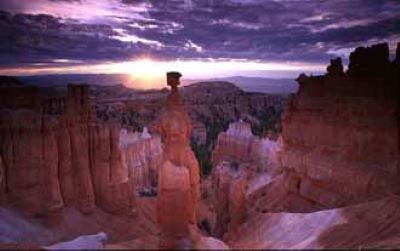
Bryce Canyon National Park
Canyonlands National Park
Wasatch Mountains
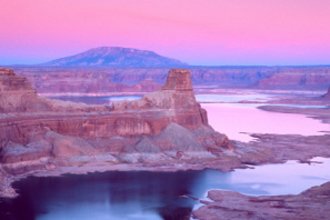
Lake Powell
Zion National Park
Arches National Park
Great Salt Lake

Monument Valley