That You Were Never The Same?
Utah Mighty Five National
Parks 5-Day Itinerary
There Are Road Trips
Then There’s This One
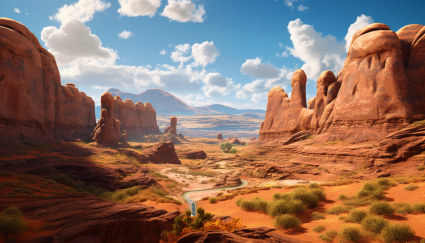
A real Utah Mighty 5 national parks 5-day itinerary isn’t a lazy wander. It’s not the kind of trip where you sleep in, linger over a second cup of coffee, and then casually decide what to do by noon.
No. This might be better referred to as a 5-day challenge.
Now why would I come up with an itinerary that lasts only 5 days? Well, it’s because thousands of people are actually actively searching for this length of a trip online.
Maybe they’re just trying to see if it’s possible. Well, yes, I’ll show here that a 5-day Mighty Five road trip is possible. It just may not be completely rational.
It’s for the visitor who has time limitations but wants to see Zion National Park, Bryce Canyon National Park, Capitol Reef National Park, Arches National Park, and Canyonlands National Park in one hard-charging spree.
It’s for people who love big scenery, can get their butts out of bed early, and understand that some of the best things in Utah come with a little windshield time. Utah’s roads are built for that anyway.
This entire itinerary is supported by excellent roads and highways. And many times in-between these points, you won’t come across another vehicle for miles.
They run through red rocks, under sandstone cliffs, past state parks, near national monuments, and across some of the best high-desert scenery in the country.
That said, let me be honest with you. If you want plenty of time in each park, this is too aggressive.
If you want to do the best hikes … or even one hike … in all 5 parks, it’s too aggressive.
If you want to turn this into a round trip back to Salt Lake City in only 5 days, it’s really too aggressive. Add an extra day, or even more, and life gets much easier.
But if your goal is to see all 5 of Utah’s national parks in one memorable sweep, this can absolutely be done. The key is to know what this trip is.
It’s a greatest-hits route.
It is scenic overlooks, one or two short hike choices in each park, Visitor Center stops when useful, a few iconic rock formations, and a smart willingness to keep moving.
It’s not a deep dive.
This is a fast, thrilling Utah national parks road trip that gives you the big picture first. Then later, if Utah gets under your skin the way it does with many people, you can come back and do it slower.
Or, if you never return, you’ve managed to see some of the most spectacular scenery you’ll ever see in less than a week.

The Best Time to Try
This Five-Day Challenge
If you’re serious about pulling off a Utah Mighty 5 national parks 5-day itinerary, crowd timing matters.
May through September and holiday periods are the busy season in southern Utah. The traffic is typically heaviest from about 8 a.m. to 4 p.m.
I recommend visiting early in the morning (real early) or later in the day whenever possible. It’s especially important on a trip like this where you don’t have much margin for error.
My favorite times for a trip like this are generally the fall and spring seasons. You’ll get smaller crowds, more comfortable temperatures, easier parking lot situations, better light, and more breathing room.
But there’s a catch. Bryce Canyon is a high-altitude park. Bryce averages around 8,000 feet altitude and climbs above 9,000 feet so cold weather and snow can still matter there when lower parks feel mild.
Some of the fiercest winds I’ve ever experienced were on top of this plateau.
Arches National Park, meanwhile, is quite pleasant in the spring and fall bring but are also very busy. In contrast, summer temperatures there can top 100º F. so that may temper your plans somewhat.
So here is my practical advice. The best time for this challenge is when you can combine cooler weather with a willingness to start very early every morning.
If you begin before the crowds and before the heat, you’ll give yourself a much better chance to see more and enjoy more.
That matters at Zion, Arches, Bryce, and even at some Capitol Reef trailheads where parking often fills up by 9:00 a.m. and stays crowded into late afternoon.
Before You Go: A Few
Smart Ground Rules
First, use the National Park Service websites as your final check every single day. Not just before the trip. Every day.
I’m not going to link to those here as they’re all separate sites for each park and they’re really easy to Google. They all have their own idiosyncrasies and rules.
- Zion’s shuttle schedules change seasonally. During shuttle season, you can’t drive personal vehicles on the Zion Canyon Scenic Drive.
- Bryce Canyon trail conditions can change frequently due to adverse weather. It’s on a plateau above 9,000 feet.
- Arches traffic can back up due to the high numbers of visitors.
- Capitol Reef roads and washes can shift dramatically after bad weather. Even the base is situated at well over 5,000 feet in altitude and goes up from there.
- Canyonlands is more spread out and remote than many first-time visitors realize.
Second, build a backup plan. That’s not optional in southern Utah. Flash floods are a real danger in narrow canyons and washes. Zion National Park warns that flash floods can happen at any time and may be caused by storms that are miles away.
Capitol Reef National Park says even a slight chance of rain can produce a flash flood and that sunny skies in one part of the park don’t guarantee safety elsewhere. If your dream stop involves slot canyons, washes, or anything narrow, have another plan ready.
Third, don’t oversell yourself on hikes. This itinerary works best when you pair scenic drive stops, scenic overlooks, one short walk, and maybe one more ambitious trail on only a few days.
Mesa Arch is a perfect example. It’s an easy 0.6-mile round trip. Hickman Bridge at Capitol Reef is another good choice at roughly 0.9 miles with 400 feet of elevation gain. I can vouch for this one as it took us just over an hour up and back.
Delicate Arch, on the other hand, is a beautiful but much more serious 3-mile round-trip hike with substantial climbing. Bryce’s Queen’s Garden and Navajo Loop combinations are excellent but they’re not casual strolls either.
Fourth, think one-way if you can. If you’re flying, a Salt Lake City International Airport start and a southern finish near St. George or even Las Vegas is cleaner than forcing a return.
Salt Lake City is a little more than 3 ½ hours from Moab and just over 4 hours from Zion. Zion is about 2 ½ hours from Las Vegas. That tells you how to plan if you’re coming from outside the state or country.
A one-way trip is the smart play. A round trip can be done but try that and an extra day starts sounding awfully good.
Itinerary 1: Starting from Salt Lake City
This is the most natural north-to-south version of the trip. Arches first -> then Canyonlands -> then Capitol Reef -> then Bryce - > then Zion.
Day 1: Salt Lake City to Moab, then Arches National Park
Start early out of Salt Lake City. Real early.
Moab, the gateway town for Arches National Park and Canyonlands National Park, is about 3 ¾ hours from Salt Lake City. If you leave at dawn, you can reach the Moab area with enough time to do Arches the right way instead of the rushed way.
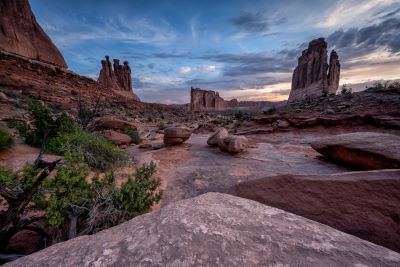
Arches National Park, despite the crowds, makes this visit easy because the park road and roadside viewpoints make it vehicle-friendly for a partial first day. The Arches Visitor Center sits just inside the park entrance 5 miles north of Moab.
You can drive the paved park roads and see the major viewpoints in roughly 3 – 4 hours if you keep moving and stop efficiently. That makes it a perfect place to begin your Utah road trip itinerary.
On a 5-day trip, I would focus on the park’s famous scenic drive, Balanced Rock, the Windows area, and one Delicate Arch decision.
If you have the legs and daylight, hike to Delicate Arch. If not, use the Delicate Arch viewpoints instead.
The full Delicate Arch trail is strenuous and 3 miles roundtrip while the upper viewpoint is much shorter though still a bit steep.
This is one of those places where being honest with yourself helps. On the first day, after a long drive, many people are better off taking the view than forcing the full hike.
One more note. As of the spring of 2026, Arches says it isn’t requiring advanced timed-entry reservations this year. That’s helpful. But I would still check before you go because these policies can change.
Stay the night in Moab.
Day 2: Canyonlands National Park, then begin the move toward Capitol Reef
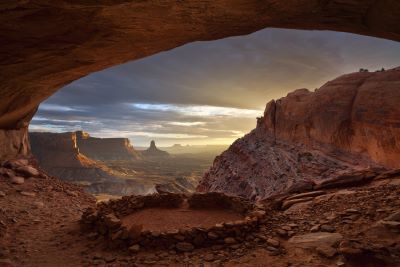
This morning belongs to Canyonlands National Park. For this version of the trip, stick to the Island in the Sky district. The visitor center is about 40 minutes from Moab.
That district gives you the fastest payoff in spectacular views for the least amount of time. It is the perfect place for a half-day visit on a tight schedule.
If you can manage an early morning start, Mesa Arch is one of the best choices in the park. It is a short 0.6-mile hike and one of the classic sunrise spots in the Southwest.
Even if you don’t catch first light, it is still one of the best view stops on this entire trip. Then continue with Green River Overlook, Grand View Point, and whatever other scenic overlooks fit your pace.
In about 2 hours, you can visit Grand View Point, Green River Overlook, and Mesa Arch.
If you want one excellent optional detour before you head west, Dead Horse Point State Park is close by and absolutely worth your attention. The overlook sits 2,000 feet above the Colorado River and offers one of the most photographed vistas anywhere around Moab.
On a 5-day challenge, I would only do Deadhorse Point if you move briskly through Canyonlands. But it is a perfect place for one last jaw-drop before the longer drive.
By late morning or early afternoon, hit the road toward Capitol Reef country. This is one of the longer drives in the itinerary so don’t bog yourself down trying to squeeze in every last overlook around Moab.
The point is not to “win” Canyonlands. The point is to keep the whole 5-park rhythm alive.
Stay overnight in Torrey if possible. It’s just 8 miles from the west entrance of Capitol Reef National Park and makes a much better base than trying to stretch the day too far.
Although a small town, there are several nice hotels and multiple Airbnbs (which is the way we usually roll) in Torrey.
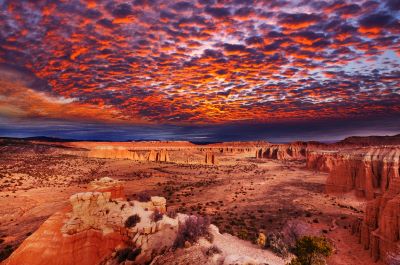
Day 3: Capitol Reef National Park, then Scenic Byway 12 toward Bryce
Capitol Reef is the park that often sneaks up on people. It doesn’t always get the breathless first-timer hype that Zion or Arches gets. But that’s part of its charm.
It’s quieter. It’s more understated. It’s less crowded. It feels like the perfect place to catch your breath without actually slowing down very much.
It’s actually our favorite national park in Utah.
Like all of our Utah national parks, it is open year-round. If you only have a couple hours, you can stop at the Visitor Center, consider the park movie, take a short hike like Hickman Bridge, drive the scenic drive, and see petroglyphs or the historic Fruita area.
The scenic drive itself is 7.9 miles one way and isn’t a loop. It’s an out-and-back so you’ll return on the same road.
This is a very full day so you’ll have to be careful how hard to push. My recommendation is simple:
- Hit the Visitor Center early.
- Drive part or all of the scenic drive.
- Do Hickman Bridge if your legs are still with you. It’s one of the park’s best hikes for a trip like this because it is memorable without devouring the entire day.
- If you’re feeling wiped out, skip the hike and take the scenic drive plus roadside viewpoints instead.
- Capitol Dome is easily admired from the Hickman Bridge trailhead area.
- The Fremont River corridor through Fruita is a perfect place to absorb the park’s natural beauty without overcommitting.
Then you’re off on one of the best drives in Utah.
Scenic Byway 12 takes you from Capitol Reef National Park to Bryce Canyon National Park. It passes through some of the most beautiful country in southern Utah. It’s one of America’s most beautiful drives.
It threads through twisting canyons, forests, red rock country, and the edges of Grand Staircase-Escalante National Monument. This is where your windshield becomes part of the attraction.
On a slower trip, I would tell you to wander. I would tell you to stop at every scenic byway pullout that catches your eye, dip into side roads, and maybe chase a few slot canyons.
On this trip, discipline is the secret sauce. Enjoy the drive, choose a couple scenic overlooks, maybe pull off in Boulder or Escalante, and then get back after it quickly.
Save a deeper dive into Grand Staircase-Escalante National Monument for the trip when you have time to do it justice.
When you get there (plan ahead), stay near Bryce Canyon.
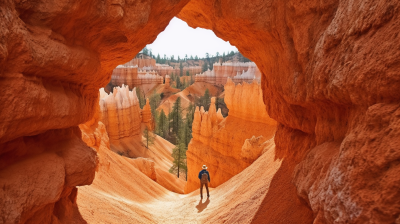
Day 4: Bryce Canyon National Park, then on to Zion
Bryce Canyon National Park is different from the other four parks.
It’s higher. Cooler. More compact in its main amphitheater zone. And for a fast trip, that’s actually a gift.
A shorter summer visit should focus on the first 3 miles of the park especially the Bryce Amphitheater area. For a 5-day run like this, that’s perfect.
Start at the ever-present, wallet-draining Visitor Center. Then head to Bryce Point, Sunrise Point, Sunset Point, and Inspiration Point depending on time and parking.
If you want the big sweeping look without a major hike, these are your money stops.
If you want one hike at Bryce, I would choose the Queen’s Garden/Navajo combination over trying to do too much. That combined loop is about 2.9 miles roundtrip.
It gets you get down among the hoodoos, past Wall Street or the Two Bridges side depending on conditions and back out without eating the entire day. The Navajo Loop Trail by itself is shorter but the combination route gives a fuller taste of the park’s strange beauty.
Just remember that Wall Street sometimes closes seasonally so check the current conditions board before you commit.
If you have more time than expected, keep driving the main road south. The Southern Scenic Drive from the Bryce Visitor Center to Rainbow and Yovimpa Points takes about 40 minutes one way.
The farther overlooks are equally as spectacular. On a 5-day challenge, though, I would only do that if the morning is going smoothly and you plan to reach Zion later rather than sooner.
By afternoon, start the drive to Zion National Park. That drive usually takes about 1½ to 2 hours. It’s short enough to make this park-to-park pairing one of the easiest in the whole itinerary.
Stay near Springdale if you can but Hurricane or even St. George will suffice.
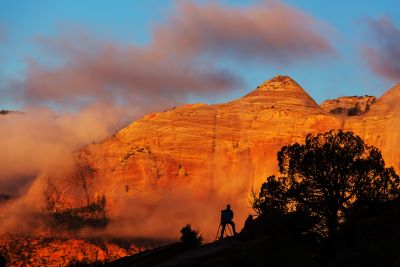
Day 5: Zion National Park
End big. Zion is the park that tends to hit people in the chest.
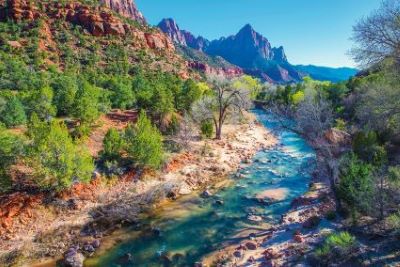
The Virgin River carved those canyon walls over immense spans of time and the main canyon feels both intimate and huge at the same time. The Zion Canyon Visitor Center is the place to start and during most of the year, the Scenic Drive is accessed by shuttle only.
You don’t need a ticket or reservation for the shuttle but during shuttle season you can’t drive your own vehicle up the main Zion Canyon Scenic Drive. That makes early morning especially valuable.
Get there early. Beat the parking lot headache if you can. Then choose your Zion flavor.
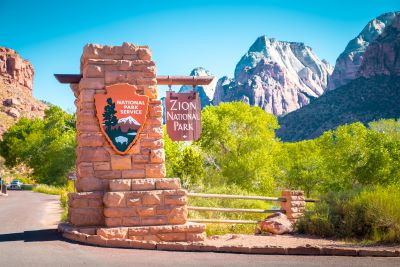
If you want easy and iconic, ride the shuttle, get off at a few key stops, and spend your time enjoying the canyon floor, the river, and the soaring cliffs around you.
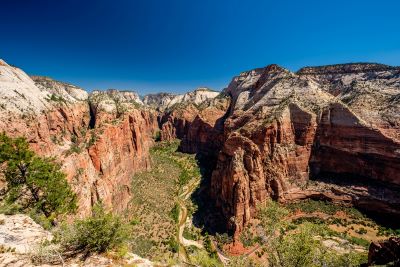
If you want a short walk with a big payoff, Canyon Overlook is outside the shuttle zone and gives a terrific sense of the park’s scale.
If you want something more ambitious, there are other possibilities. But on a 5-day itinerary, I would keep Zion simple. After the previous hectic days, it’s the perfect place to soak in the spectacle instead of racing every minute.
One important caution. Zion is not the place to get careless with flash floods. The park warns that flash floods can happen at any time. The Narrows can close when the Virgin River flow rises or when a flash flood warning is issued.
On a trip like this, don’t stubbornly force a river or narrow-canyon plan if the park is telling you no. That’s exactly why you keep a backup plan.
From here, you can continue south toward Las Vegas which is about 170 miles away. Or spend another night in the Zion or St. George area. You can also head back to Salt Lake City but, since it is 4 hours away, you may want to plan on one more travel day.
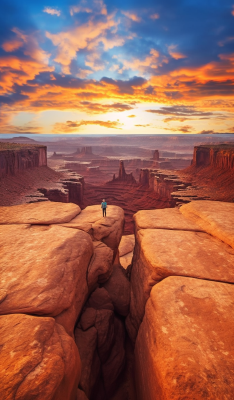
Itinerary 2: Starting from Colorado
or Eastern Utah
This second Utah Mighty 5 national parks 5-day itinerary looks a lot like the Salt Lake City version but it feels easier at the front end.
If you’re coming from Colorado on I-70, from the Denver side, Moab is roughly 5½ hours west of Denver. That’s still a long drive but it sets you up well.
Like coming from the north, you’re entering Utah from the side where Arches and Canyonlands make the most sense first.
Day 1: Colorado to Moab
Make the day mostly about getting there. If you arrive with time and energy, dip into Arches National Park for sunset light at a viewpoint rather than trying to conquer the whole park.
Delicate Arch at sunset is famous for a reason but on arrival day a viewpoint stop is often smarter than a full hike. The best thing you can do is get settled in Moab and be ready for two big park mornings.
Day 2: Arches National Park
Give Arches the better of your two Moab-area days. Start at the Visitor Center, follow the main scenic drive, and see the major viewpoints.
Decide then whether Delicate Arch is worth your limited time and energy. If not, The Windows section and the roadside rock formations still give you a terrific day.
Day 3: Canyonlands in the morning, then toward Capitol Reef
This is very similar to the Salt Lake City route. Do Island in the Sky, focus on Mesa Arch and the big overlooks, and leave before you turn the day into a marathon.
If you have any urge to linger around the Colorado River corridor near Moab, fight it. Save that for your return trip. A 5-day challenge depends on discipline.
Day 4: Capitol Reef, then Bryce
Capitol Reef is your transition park and a beautiful one. Use the Visitor Center, choose a short hike or the scenic drive, and then continue south. This is the shortest visit among the 5 parks.
If time allows, Scenic Byway 12 becomes one of the highlights of the entire trip, especially where it brushes Grand Staircase-Escalante National Monument.
Day 5: Bryce, then Zion if you are finishing south
This is where you decide how hard to push.
If you want to finish the official 5-park sequence, do Bryce early and continue to Zion for at least a partial afternoon or evening visit. Since Bryce is about 1½ to 2 hours from Zion, the pairing works.
But it will be a long drive day with a lot packed in. Another strategy is to stay near Bryce on day 4, do Zion properly on day 5, and leave Bryce for a faster rim-focused visit the afternoon before.
There’s no perfect answer here. There’s only the answer that fits your energy and your departure point.
If your home base is back east and you truly need a round trip, I would stop pretending this is a 5-day itinerary and simply add an extra day or two. Even that one extra day can save the whole trip from becoming a blur.
Itinerary 3: Starting From
Las Vegas or The South
This is the classic south-to-northwest-to-east variation. It’s also the version that feels the most like a pure southern Utah sprint.
Zion is about 152 miles from Las Vegas which makes it just over 2 hours. So if you’re starting from Nevada or coming out of California through Las Vegas, Zion is the obvious first stop.
Day 1: Las Vegas to Zion National Park
This is the easiest park-entry day of the three itineraries. Drive from Las Vegas, settle in near Springdale, and spend the afternoon or evening getting your first taste of Zion.
Because Zion is the most logistically constrained of the 5 parks due to the shuttle system and crowds, I actually like starting here. You can get oriented, learn the shuttle flow, and be ready to go the next morning.
Day 2: Zion in the morning, then Bryce Canyon
Use the early hours in Zion. That’s when the park is at its most manageable. Then move on.
Zion to Bryce is around 1¾ hours. That makes it very realistic to do a half-day in Zion and still have time for a rim drive or scenic overlooks at Bryce late in the day.
If the weather is good and the light is right, Bryce at the end of the day can be magic.
Day 3: Bryce Canyon in the morning, then Scenic Byway 12 to Capitol Reef
This is a glorious driving day. Start with Bryce’s main amphitheater. Do a short walk if you feel good. Then take Scenic Byway 12 toward Capitol Reef.
Capitol Reef is roughly 112 miles and about 2 hours from Bryce via Scenic Byway 12. That road passes through astonishing country. This is where the trip begins to feel cinematic.
If you are tempted by side adventures around Escalante, national monuments, or little slot canyons tucked into the sandstone, remember the mission. 5 days. 5 parks.
Keep moving. Grand Staircase-Escalante is a perfect place for a future dedicated trip, not a rushed detour that blows up the whole schedule.
Day 4: Capitol Reef to Moab
Spend the morning at Capitol Reef. This may not seem like the flashiest day but Capitol Reef is our favorite Utah national park. It’s not as crowded as the others (except maybe for Canyonlands) and Torrey is a tiny town but we just love the area.
Stop at the Visitor Center, see the petroglyph area or Fruita, drive the scenic road if you haven’t already, and then head east to Moab. If it were me and I had the time, I would spend an extra day here but some people may not find this area as spectacular as we do.
Day 5: Arches and Canyonlands
This is a bold finale. Can you see both in one full day? Yes, if you’re disciplined.
Arches is just north of Moab, and Island in the Sky in Canyonlands is about 40 minutes from town in the other direction. On a normal vacation I wouldn’t recommend smashing them together.
On a Utah Mighty 5 national parks 5-day itinerary, though, this is exactly the kind of compromise that gets the mission accomplished.
I would pick one of two strategies:
- The first is Arches at sunrise or early morning, then Canyonlands in the afternoon.
- The second is Mesa Arch at first light in Canyonlands, then Arches after that.
Either can work. Just don’t try to do the full Delicate Arch hike, a bunch of extra walks, Dead Horse Point, and every Canyonlands overlook all in the same day.
That’s how a great trip quickly becomes a bad one.
If You Can Add One or Two Extra Days
It gives you room for a slower Zion day or a real Delicate Arch hike without feeling rushed. Adding a day to either one of these park visits, especially with a long drive the next day, can de-stress the whole affair.
But then, once again, this is a 5-day challenge so there’s that. That’s really the difference between a 5-day challenge and a 6 or 7-day vacation. In 5 days, you’re sampling. In 6 or 7, you can begin to settle.
Final Thoughts
A real Utah Mighty 5 national parks 5-day itinerary is intense. It might even be slightly insane. But, it’s also fun if you like road trips like we do. Especially if you don’t have a lot of time.
Maybe that’s why I found so many people searching for a 5-day itinerary to see all of the Mighty 5 national parks in Utah. You’ll see Zion National Park, Bryce Canyon National Park, Capitol Reef National Park, Arches National Park, and Canyonlands National Park in one sweep.
You’ll drive scenic byways that are almost as memorable as the parks themselves. You’ll stand above canyon walls, stare through famous arches, and look out across miles of red rocks that make the whole American West feel larger than life.
Would I rather do this in 7 to 10 days? Absolutely. And that’s how we usually do it. But not everyone has that luxury.
So if 5 days is what you have, go with a plan:
- Start early morning.
- Expect several long drive stretches.
- Use the Visitor Center when it saves you time.
- Pick your best hikes carefully if you do any at all.
- Watch the weather. Respect flash floods.
- Keep a backup plan.
- And above all, remember what this trip is really about.
It’s about finally seeing these places with your own eyes. And not later. All in one road trip.